April 6th, 2016
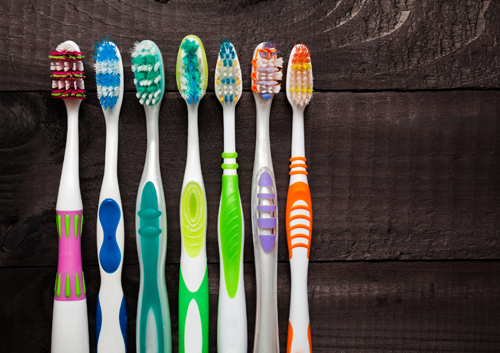
If you were to put your toothbrush bristles under a high-powered microscope, what you would see might give you nightmares: millions of bacteria, busily crawling up and down your toothbrush bristles, consuming proteins that came from your mouth, and still clinging to the bristles even after you’ve rinsed them with water.
Rinsing your toothbrush after brushing removes some of those ferociously hungry bacteria, but not all. The Canadian Dental Association says that bacterial infestations develop on toothbrushes within a month of daily use. The CDA also states that unless a toothbrush is sterilized before being packaged, it’s going to come with bacteria – free of charge!
Germs and Frayed Bristles: the Demise of a Toothbrush
Dr. Tang and our staff recommend that you toss your old toothbrush in the trash and purchase a new one every three months. Children tend to bite on their toothbrushes, which makes the bristles degrade and fray faster. Chances are kids may need to have their toothbrushes changed more frequently.
Where do they hide?
Bacteria are tenacious little germs that head for those concealed areas between toothbrush bristles. They are highly adaptable and exist in every type of extreme environment. Some people actually go so far as to put their toothbrush in a microwave for a few seconds to kill germs, but this doesn't always work either. In fact, you may only end up with a toothbrush that’s as bendable as a Gumby doll – and still covered with germs.
Feed a Cold, Starve a Fever, and Get Rid of Your Toothbrush
When you have a head cold, your mouth is teeming with bacteria gleefully roaming around, and gobbling mucus and dead skin cells. If you brush your teeth while suffering a sinus condition, the brush will act like a magnet for ravenous bacteria. Use your old toothbrush while you are sick, but as soon as you feel better, throw it away and get a new one. Otherwise you could possibly re-infect yourself with the same cold germs!
March 30th, 2016

Because babies’ teeth don’t appear until around six to eight months of age, it’s a natural misconception that they don’t need dental care. But the steps you take as the parent of an infant can help your baby maintain good oral health and develop healthy dental habits in the future.
It’s easy to take care of a baby’s teeth and gums, especially when oral hygiene for your infant becomes part of the normal daily routine. Learn more about how you can promote good dental health for your baby with these tips and considerations.
Taking Care of Baby’s Oral Hygiene
- Dental Hygiene for Birth to Six Months. Cleaning your infant’s gums is as important as cleaning teeth will be later. Hold your baby in your arms, and with a clean, moistened washcloth wrapped around your index finger, gently massage his or her gums.
- Dental Hygiene for Six to 12 Months. After teeth begin to appear, it’s time to switch to a soft, children’s toothbrush for teeth cleaning. New research has shown that fluoride toothpaste is safe and recommended for use once your baby’s first tooth arrives. Gently brush your baby’s teeth after each feeding, in the morning, and before bedtime, just as you did before teeth appeared.
- Good Bedtime Habits. One of the most important things you can do to protect your infant from tooth decay is to avoid the habit of putting baby to bed with a bottle. Use other soothing bedtime activities, such as rocking and lullabies, to help your baby drift off to sleep.
- A Note about Dental Decay. Many people are unaware that dental decay is transmissible. Avoid placing your baby’s bottle, sippy cup, or pacifier in your own mouth to test the temperature. Likewise, don’t share utensils with your baby.
Partner With Your Dentist
Your baby should receive his or her first dental health checkup by the age of six months. Even though your infant may not have teeth yet, Dr. Tang can assess the risk your baby might face for oral diseases that affect hard or soft tissues. Dr. Tang can also provide you with instructions for infant oral hygiene, and explain what steps to add as your baby grows and develops.
Just 4 Kids Pediatric Dentistry is your partner for good oral health, and we’re here to make caring for your baby’s dental hygiene and health easier and more enjoyable for you.
March 23rd, 2016

Your infant’s first teeth will begin to appear around six to 12 months of age. You might wonder how important these primary teeth really are. After all, baby teeth are destined to fall out within a few years and be replaced by a full set of permanent teeth. However, baby teeth have important functions, and proper care can set the stage for excellent oral and overall health.
Promote Better Nutrition
The appearance of your baby’s primary teeth around six to 12 months of age coincides with changes in your infant’s nutritional needs. Beginning at six months, exclusive breastfeeding is no longer nutritionally sufficient; this is the age at which you should introduce solid foods.
At six to eight months, when your baby can start to chew, strained or pureed fruits and vegetables are appropriate. As your little one’s teeth grow in and chewing abilities progress through 12 months of age, you can gradually add cereal, bread, cooked meats, and other adult foods to his or her nutritious diet.
Increase the Life Expectancy of Baby Teeth
Although baby teeth are inevitably going to fall out and be replaced by permanent ones, making baby teeth last serves an important role that can have benefits into the future. Baby teeth serve as placeholders for permanent teeth. If they decay and fall out too soon, permanent teeth are more likely to grow in crooked.
How to Take Care of Baby Teeth
Your baby’s primary teeth are already in his or her mouth at birth; they are just invisible because they have not broken through the gums. Since they are already present, your baby can get cavities if you do not practice proper oral hygiene from the beginning.
- Do not let your baby fall asleep with a bottle in his or her mouth.
- Brush your child’s baby teeth twice a day as soon as they come in.
- Floss your child’s teeth as soon as he or she has two teeth that touch.
- Visit Just 4 Kids Pediatric Dentistry for your baby’s first checkup when the first tooth arrives.
March 16th, 2016
“St. Patrick's Day is an enchanted time -- a day to begin transforming winter's dreams into summer's magic.” Adrienne Cook
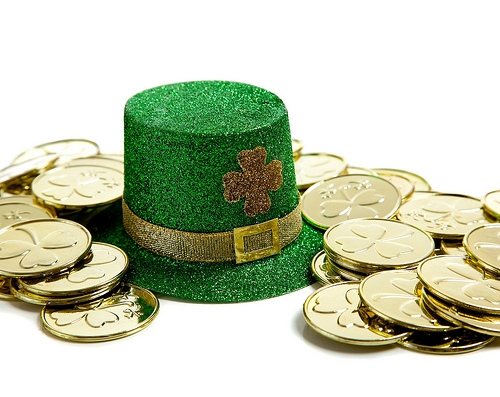
Lucky green shamrocks, leprechauns, and pots of gold – it must be St. Patrick’s Day! If you’re not Irish, how do you go about celebrating St. Patrick’s Day? It’s easy: You just put on one of those tall leprechauns hats, dress in green from head to toe, and wear one of those carefree pins that say “Kiss Me, I’m Irish”. On St. Patrick’s Day, everyone is Irish, and that is the universal beauty of the holiday. Celtic pride does not discriminate.
Wondering what our team at Just 4 Kids Pediatric Dentistry is doing to celebrate March 17th? Well, we’ve thought about doing everything from handing out lucky gold coins (you know, the fake ones that are made of chocolate) to shamrock stickers. Maybe we’ll even give away green toothbrushes and floss! You’ll never know unless you come in to see Dr. Tang !
All kidding aside, St. Patrick’s Day is an important cultural and religious holiday. There are lavish parades and church services across Ireland on March 17th. Over time, however, the holiday has developed into a day to observe Irish culture in general. In places like England and Canada, where there is a large Irish Diaspora, the holiday has greater significance than other countries. From the street parades of Montreal to the annual three-day festival of celtic music and culture in Manitoba, it is a day of celebration, and many Canadians of Irish descent will cook up a traditional meal of corned beef and cabbage.
So, to all of you with Irish ancestry, and to all of you who have decided to be Irish for the day, our office wishes you a Happy St. Patrick’s Day. Good luck looking for a pot of leprechaun gold, which is said to exist at the end of the rainbow. However, keep away from those sugary Lucky Charms; sweet cereals might taste good, but your kids’ teeth might not be feeling too lucky if they eat it for breakfast every day. Have a great St. Paddy’s Day!