Our Blog

What kind of toothbrush and toothpaste should my child use?

July 27th, 2016
Imagine that you sit down for some evening television, and during the course of the evening, you see five commercials regarding dental products. They all claim to be the best. Then remember your last visit to the dental aisle at a local grocery store. The choices are overwhelming and there seems to be no sure answer as to which would be the best choice for your child.

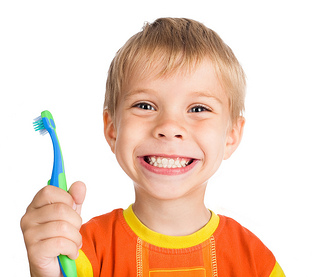
Just 4 Kids Pediatric Dentistry recommends that parents break down the decision process. First, consider your child’s age and stage of development. Up until age ten to 12, your child cannot adequately brush or floss independently. It is not a maturity issue, but rather dexterity. Automatic toothbrushes are highly appropriate for all ages. Brushing quality improves when using a battery-powered toothbrush. Use it together with your child, and always play an active role in your child’s oral home care.

As a general rule, the brush head of the toothbrush should be a little larger than the child’s upper portion of the thumb. This will help ensure it will fit in all the places it needs to.

Flossers are great for children. These will have a horseshoe shape on one end with floss in-between. A particular brand name does not matter. Some have a higher quality and this should be evident when you use them. You can make a choice for individual preference with color, handle size, or shape, etc.

There are many brands of toothpaste and there are also differences in the ingredients. Some contain sodium fluoride, the standard ingredient in cavity prevention. Others have stannous fluoride, which is anti-bacterial and anti-cavity. Potassium nitrate is commonly found in anti-sensitivity, and triclosan is found in one particular brand for anti-bacterial properties. It is most common for children to be at a high risk for cavities. Therefore, our team at Just 4 Kids Pediatric Dentistry recommends toothpaste with fluoride once your child is old enough to spit.

Before a child can spit, use toothpaste without fluoride. This is an ideal time to use toothpaste with xylitol. Xylitol should be listed as the first ingredient; this way you’ll get the almost medicinal property of this natural sweetener. After you have found the right type of toothpaste, consider its flavor. The best kind of toothpaste is one that will be used, so choose a flavor that your child will love!

If you have any other questions, our would like specific brand recommendation feel free to call us at Just 4 Kids Pediatric Dentistry or ask Dr. Wendy Tang and Dr. Amy Bellamy during your next appointment!

To use or not to use mouthwash; that is the question

July 20th, 2016

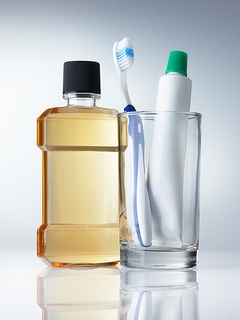
A famous mouthwash company chose the marketing slogan, “Better than flossing.” As a consumer, would you believe a high-end commercial that essentially tells you to stop flossing? Just use this brand of mouthwash and the risk of gingivitis, cavities, etc., is gone. What a wonderful idea! Now for the reality: This is simply not true.

The company that made these claims received some negative feedback for making this false claim. Does this mean that all mouthwashes are ineffective? Absolutely not. It takes a little bit of research to know which mouthwashes are most effective and best suited for you. Here are some key points to remember when choosing a mouthwash.

First, think about why you want to use a mouthwash. If you are at high risk for cavities, you would benefit from a fluoride mouthwash. Check the labels to see which ones contain fluoride.

If you have active gingivitis, a mouthwash with some antibacterial properties would be preferable. Read the labels carefully. You do not want a mouthwash containing alcohol. If you have active periodontal disease, an antibacterial mouthwash is appropriate, though you may want to discuss which kind would be best for your individual needs.

Prescription mouthwashes are also an option. You should pay close attention to the directions, such as how much and how long to use them. There is one brand in particular whose effectiveness can steadily diminish if you use it continually. There can also be side effects you should discuss with our office and/or your pharmacist.

Some great mouthwashes for kids change the color of plaque on their teeth to help them see how they are doing with their brushing. This is a great learning tool for the child and the parent! Why not pick up a bottle for yourself next time you’re at the store and evaluate your own performance?

Beware of claims that a mouthwash can loosen plaque. This is not accurate. Beware of any mouthwash that has alcohol. This is worth mentioning twice. Take care of your taste buds. If you are using a strong mouthwash, it can reduce your sense of taste.

These tips should help you choose the right mouthwash for your needs. Please contact Dr. Wendy Tang and Dr. Amy Bellamy at our Surrey, BC office with any specific questions!

What are dental sealants, who should get them, and how long do they last?

July 13th, 2016

Dental sealants are an excellent way to protect children’s teeth from tooth decay by coating them with a thin plastic material. Their teeth look and feel like normal, but they are protected from plaque build-up and decay early on. Dr. Wendy Tang and Dr. Amy Bellamy and our staff recommend sealants as a preventive measure for children before any decay appears on their teeth.

Who should get dental sealants?

Dental sealants are intended for young children as soon as their first teeth come in. Decay is most common in the molars, so taking your child to Just 4 Kids Pediatric Dentistry for sealants right when you see the molars grow in gives your child the best chance to fight tooth decay.

A child’s first set of permanent molars grow in between ages five and seven, while the second permanent molars come in between 11 and 14 years of age. Some teens and adults who don’t have tooth decay may get sealants as well, but it is less common.

How long do dental sealants last?

Once the sealant has been placed on the teeth, it lasts up to ten years. Expect to have Dr. Wendy Tang and Dr. Amy Bellamy check the sealant at every visit to our Surrey, BC office, which should be twice a year. We will look at the sealant and determine if it needs to be replaced.

What is the process of getting sealants?

Applying sealants is a simple, pain-free procedure that is done quickly at Just 4 Kids Pediatric Dentistry. There is absolutely no effect on the tooth structure from sealants.

For starters, the teeth are cleaned carefully, then dried with an absorbent material. A mild acid solution is applied to them to roughen them slightly. This is done so the sealant can bond properly to the teeth. Then the teeth are rinsed and dried, and the sealant material is painted on and dried with a special light.

Molars are susceptible to decay early on, which is why sealants are an important treatment to get for your children’s first set of teeth.

How do I make my child’s diet safe for his or her teeth?

July 6th, 2016

The food you feed your child can have a lasting effect on his or her oral health. In fact, diet plays a major role in whether a child develops cavities and decay, which can lead to many dental visits and potential tooth loss. So what should you feed your child to ensure he or she has a healthy smile for life?

Foods to Avoid

It is normal for your child to take interest in many foods -- especially those filled with sugar and carbohydrates. But as tasty as these foods are, they can cause rapid decay when eaten in excess. That’s not to say your child can never have sugar again. Dr. Wendy Tang and Dr. Amy Bellamy and our staff suggest limiting starchy and sugary foods such as candy and potato chips as much as possible.

Remember that some seemingly healthy foods can present the threat of decay too. Some of the most common culprits are sticky foods like peanut butter, raisins, and granola bars, which can stick to the teeth after eating. If you serve these foods to your child, be sure to have him or her brush immediately after eating to remove any lingering sugary residue.

Beverages

Many beverages marketed toward children contain sugar servings that far exceed the daily recommendations from national health organizations. They suggest no more than three to four teaspoons of added sugar per day for young children.

Make an effort to serve only water to your child any time other than meal times. During meals, allow your child to have milk or juice, but in limited serving sizes. Most importantly, never allow your young child to sleep with a bottle or “sippie cup” full of juice or milk. Doing so can cause rapid tooth decay: a condition known as “baby bottle caries.”

A Healthy and Balance Diet

So long as your child is brushing regularly and eating a healthy, balanced diet full of fruits, vegetables, lean proteins and whole grains, you should have little or no problem with tooth decay. For more questions about how your child’s diet affects his or her oral health, contact our Surrey, BC office to schedule a consultation.

Mon 8:00am to 4:00pm Tue 8:00am to 4:00pm Wed 8:00am to 4:00pm Thu 7:30am to 5:00pm Fri 8:00am to 4:00pm