Our Blog

What should I use to clean my baby’s teeth?

August 24th, 2016
You might think babies don’t need to brush their teeth, especially when they don’t have any. But by starting good habits like brushing when your child is young, you can lay the foundation for them to continue those good habits into adulthood.

When do I start?

The best time to start brushing your baby’s teeth is before he or she has any. Develop the habit of wiping your baby’s gums with a wet, soft washcloth or gauze every day. There is no need to use toothpaste, just wrap the gauze or cloth around your finger, moisten it with a little water, and gently rub it over the gums.

This helps your little one get used to brushing while it eliminates bacteria in the mouth that can harm emerging teeth. You don’t need to apply a lot of pressure or even take very long: just a quick, gentle rub over the gums will do it.

What do I use?

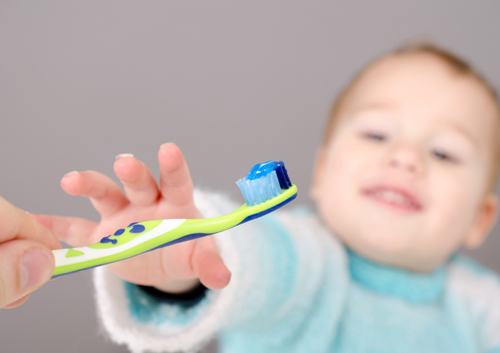
When your child’s teeth begin to come in, you will need to switch from a cloth to a baby toothbrush. Find one that has a grip big enough for your hand, but a head that is small enough to maneuver easily in your infant’s mouth.

You don’t need to use any toothpaste until your son or daughter is about a year old. Even then, though, you’ll want to use just a tiny amount: about the size of a grain of rice. When your toddler is about two years old, you can use a pea-sized amount.

By around six years of age, your child will probably rinse and spit without your help. At that point, you may want to introduce a child-friendly fluoride mouthwash.

How do I do it?

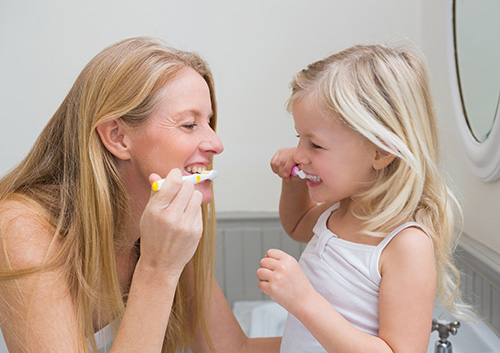
Your child probably won’t be able to brush his or her teeth alone until about the age of five or six. This means that you will need to do it. To brush your child’s teeth, gently use the brush over all the teeth and gums, even areas where the teeth have not come in yet.

As your child grows and becomes more independent, you can allow him or her to hold the toothbrush while you guide your child’s progress. Make sure you talk to your child while you are brushing, and explain why you brush: what you are doing and how you are doing it.

In addition to regular visits with Dr. Wendy Tang and Dr. Amy Bellamy, instilling good oral health habits in your child early on will ensure a lifetime of good dental health.

I brush my teeth regularly. Why do I need to floss?

August 17th, 2016

Brushing your teeth regularly is one of the most crucial parts of maintaining good oral health, and perhaps the most fundamental, however, there are also other elements involved. Flossing, for instance, is also vital; some experts would say, and Dr. Wendy Tang and Dr. Amy Bellamy and our team would agree, that it holds just as much importance as brushing your teeth. To give you a better idea of why, here are some reasons that flossing is so vital to your oral health.

Getting in-between the Teeth

While brushing your teeth effectively cleans all of the areas of your teeth that are visible, or otherwise not touching, flossing is vital because it reaches all of the areas between your teeth that you cannot see, and subsequently cannot clean using a toothbrush. These areas are among the most sensitive and vulnerable parts of your mouth because they are most susceptible to plaque and tartar buildup.

Reducing Bad Breath

It is not uncommon for someone who brushes their teeth once or twice a day to still have bad breath. The reason being is that bad breath is often created by smelly bacteria that lives in between your teeth, as well as other areas of your mouth that are not accessible using a toothbrush. And that is why flossing is one of the best ways to reduce or eliminate bad breath. Still skeptical? Try flossing your teeth with unscented floss, then smell it after, that awful scent is the source of your bad breath. Coupled with frequent brushing of your teeth, you will find that flossing can really help that stinky breath.

Brushing your teeth twice a day is hard enough, add flossing on top and it can be difficult to establish a regular habit. However, doing so is totally worth it; just look at the aforementioned reasons why. Use these for motivation the next time you don’t feel like flossing, and let us know if it worked at your next visit to our Surrey, BC office.

How do I know if I have dry mouth?

August 10th, 2016

Dry mouth, also medically known as xerostomia, is the condition of not having enough saliva, or spit, to keep your mouth wet. There are many ways to keep dry mouth at bay, including:

  • Brushing your teeth after every meal with a fluoride toothpaste
  • Flossing every day after a meal
  • Avoiding tobacco, as well as drinks containing alcohol or caffeine
  • Avoiding dry foods, as well as foods containing high salt, acid, spice, or sugar levels
  • Drinking water frequently or sucking on ice chips
  • Using a humidifier at night

Please call our convenient Surrey, BC dental office to learn more about dry mouth, or ask us during your next visit!

Understanding Cavities

August 3rd, 2016

Getting a cavity seems like delayed punishment for eating that special dessert every weekend or for the few days you forgot to floss. When you are doing everything right with minimal exception and a cavity is diagnosed, it is discouraging. Knowing how cavities form and what causes them is valuable in knowing how to prevent them. In this blog post, Dr. Wendy Tang and Dr. Amy Bellamy will help you understand cavities!

A cavity is not a one-time event. It is actually a symptom of a disease called caries. Tooth decay is a result of an active infection and condition in the mouth. There are ingredients to this infection, which include bacteria, acid, your tooth, and a food source. The main bacterial culprit is S. Mutans. Bacteria live in a housing structure called biofilm. This offers them protection, food, and an ideal replicating environment.

Biofilm can be healthy if there is a balance of good bacteria. When you have caries, the numbers of “bad” bacteria increase and produce an environment where they thrive and therefore cause tooth decay. A main indicator of this is a pH measurement of your saliva.

Several factors can influence the biofilm pH. Foods and beverages all have different pH levels. The lower the number, the higher the acidity. Since acid promotes tooth decay, a beverage like soda will promote a cavity. Water, being neutral, is a good choice to promote healthy oral pH. Healthy eating can still cause cavities. Here is an example of a highly acidic, yet traditionally healthy meal:

Toast with store-bought strawberry jam, and a cup of cottage cheese topped with fresh cranberries.

Instead, here is a better choice, which involves mixing acidic healthy foods with alkaline (non-acidic) foods to reduce the overall pH:

Toast with almond butter, and Greek yogurt topped with fresh blueberries.

The first example will result in a very low pH in the mouth and even in the rest of the body. The second meal mixes highly acidic blueberries with an alkaline Greek yogurt. Dairy products from cows are highly acidic. Toast is acidic because of the yeast and almonds are alkaline.

A natural buffer is saliva. Whenever mouth breathing or medications compromise the saliva flow, the pH is going to drop and caries can go rampant. Getting a cavity is not just about the sweets or forgotten flossing sessions. It is about the pH levels and bacterial management.

For more helpful tips about how to avoid cavities, contact our Surrey, BC office.

Mon 8:00am to 4:00pm Tue 8:00am to 4:00pm Wed 8:00am to 4:00pm Thu 7:30am to 5:00pm Fri 8:00am to 4:00pm