Our Blog

To use or not to use mouthwash; that is the question

November 18th, 2020
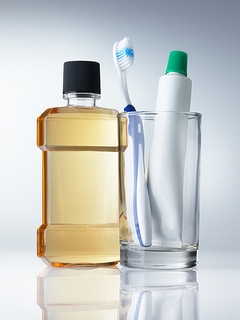
A famous mouthwash company chose the marketing slogan, “Better than flossing.” As a consumer, would you believe a high-end commercial that essentially tells you to stop flossing? Just use this brand of mouthwash and the risk of gingivitis, cavities, etc., is gone. What a wonderful idea! Now for the reality: This is simply not true.

The company that made these claims received some negative feedback for making this false claim. Does this mean that all mouthwashes are ineffective? Absolutely not. It takes a little bit of research to know which mouthwashes are most effective and best suited for you. Here are some key points to remember when choosing a mouthwash.

First, think about why you want to use a mouthwash. If you are at high risk for cavities, you would benefit from a fluoride mouthwash. Check the labels to see which ones contain fluoride.

If you have active gingivitis, a mouthwash with some antibacterial properties would be preferable. Read the labels carefully. You do not want a mouthwash containing alcohol. If you have active periodontal disease, an antibacterial mouthwash is appropriate, though you may want to discuss which kind would be best for your individual needs.

Prescription mouthwashes are also an option. You should pay close attention to the directions, such as how much and how long to use them. There is one brand in particular whose effectiveness can steadily diminish if you use it continually. There can also be side effects you should discuss with our office and/or your pharmacist.

Some great mouthwashes for kids change the color of plaque on their teeth to help them see how they are doing with their brushing. This is a great learning tool for the child and the parent! Why not pick up a bottle for yourself next time you’re at the store and evaluate your own performance?

Beware of claims that a mouthwash can loosen plaque. This is not accurate. Beware of any mouthwash that has alcohol. This is worth mentioning twice. Take care of your taste buds. If you are using a strong mouthwash, it can reduce your sense of taste.

These tips should help you choose the right mouthwash for your needs. Please contact Dr. Wendy Tang and Dr. Amy Bellamy at our Surrey, BC office with any specific questions!

What kind of toothbrush and toothpaste should my child use?

November 11th, 2020

Imagine that you sit down for some evening television, and during the course of the evening, you see five commercials regarding dental products. They all claim to be the best. Then remember your last visit to the dental aisle at a local grocery store. The choices are overwhelming and there seems to be no sure answer as to which would be the best choice for your child.

Just 4 Kids Pediatric Dentistry recommends that parents break down the decision process. First, consider your child’s age and stage of development. Up until age ten to 12, your child cannot adequately brush or floss independently. It is not a maturity issue, but rather dexterity. Automatic toothbrushes are highly appropriate for all ages. Brushing quality improves when using a battery-powered toothbrush. Use it together with your child, and always play an active role in your child’s oral home care.

As a general rule, the brush head of the toothbrush should be a little larger than the child’s upper portion of the thumb. This will help ensure it will fit in all the places it needs to.

Flossers are great for children. These will have a horseshoe shape on one end with floss in-between. A particular brand name does not matter. Some have a higher quality and this should be evident when you use them. You can make a choice for individual preference with color, handle size, or shape, etc.

There are many brands of toothpaste and there are also differences in the ingredients. Some contain sodium fluoride, the standard ingredient in cavity prevention. Others have stannous fluoride, which is anti-bacterial and anti-cavity. Potassium nitrate is commonly found in anti-sensitivity, and triclosan is found in one particular brand for anti-bacterial properties. It is most common for children to be at a high risk for cavities. Therefore, our team at Just 4 Kids Pediatric Dentistry recommends toothpaste with fluoride once your child is old enough to spit.

Before a child can spit, use toothpaste without fluoride. This is an ideal time to use toothpaste with xylitol. Xylitol should be listed as the first ingredient; this way you’ll get the almost medicinal property of this natural sweetener. After you have found the right type of toothpaste, consider its flavor. The best kind of toothpaste is one that will be used, so choose a flavor that your child will love!

If you have any other questions, our would like specific brand recommendation feel free to call us at Just 4 Kids Pediatric Dentistry or ask Dr. Wendy Tang and Dr. Amy Bellamy during your next appointment!

Oral Health Concerns for Teens

November 4th, 2020

You have a lot more freedom as a teenager than you did as a young child. You also have a lot more responsibilities, and one of your jobs is to take care of your teeth. Develop and maintain good dental habits now so you can have great dental health for life!

Tooth Decay

As a teenager, you risk tooth decay, or dental cavities, if you are not careful. In fact, 59% of adolescents aged 12 to 19 have at least one cavity, according to the National Institute of Dental and Craniofacial Research. Dr. Wendy Tang and Dr. Amy Bellamy and our staff recommend keeping your teeth strong and healthy by brushing at least twice a day and flossing every day.

If you suspect that you have tooth decay, do not be embarrassed. Instead, ask your parents to bring you to Just 4 Kids Pediatric Dentistry to get it looked at. When you do not treat your dental cavities, they can turn into more serious problems. A severely damaged tooth may need to be treated with a root canal or even an extraction.

You can take easy steps to prevent tooth decay when you are at school or hanging out with your friends. Carry a bottle of water around with you so you can take a sip after you eat any kind of food. Choose water or milk instead of soda or sports drinks, and if you chew gum, select a sugar-free flavor.

Other Oral Health Concerns

You can probably think of many reasons why you should not smoke or use tobacco. Your oral health is another one. Tobacco gives you bad breath and stains your teeth yellow. It also increases your risk for gum disease and cancer of the mouth. Smoking even slows the speed of healing after you have dental procedures done.

Here are a few more tips that can keep your mouth attractive and healthy during your teen years.

  • Drink plenty of milk.
  • Limit candies and sugary snacks.
  • Wear a mouthguard if you play a contact sport.
  • Visit Just 4 Kids Pediatric Dentistry twice a year.
  • Reduce infections and avoid piercing your tongue and lips.

You only get one set of permanent teeth in your life, so get in the habit of taking care of them now!

My toothbrush did what?

October 28th, 2020

If you were to put your toothbrush bristles under a high-powered microscope, what you would see might give you nightmares: millions of bacteria, busily crawling up and down your toothbrush bristles, consuming proteins that came from your mouth, and still clinging to the bristles even after you’ve rinsed them with water.

Rinsing your toothbrush after brushing removes some of those ferociously hungry bacteria, but not all. The Canadian Dental Association says that bacterial infestations develop on toothbrushes within a month of daily use. The CDA also states that unless a toothbrush is sterilized before being packaged, it’s going to come with bacteria – free of charge!

Germs and Frayed Bristles: the Demise of a Toothbrush

Dr. Wendy Tang and Dr. Amy Bellamy and our staff recommend that you toss your old toothbrush in the trash and purchase a new one every three months. Children tend to bite on their toothbrushes, which makes the bristles degrade and fray faster. Chances are kids may need to have their toothbrushes changed more frequently.

Where do they hide?

Bacteria are tenacious little germs that head for those concealed areas between toothbrush bristles. They are highly adaptable and exist in every type of extreme environment. Some people actually go so far as to put their toothbrush in a microwave for a few seconds to kill germs, but this doesn't always work either. In fact, you may only end up with a toothbrush that’s as bendable as a Gumby doll – and still covered with germs.

Feed a Cold, Starve a Fever, and Get Rid of Your Toothbrush

When you have a head cold, your mouth is teeming with bacteria gleefully roaming around, and gobbling mucus and dead skin cells. If you brush your teeth while suffering a sinus condition, the brush will act like a magnet for ravenous bacteria. Use your old toothbrush while you are sick, but as soon as you feel better, throw it away and get a new one. Otherwise you could possibly re-infect yourself with the same cold germs!

Mon 8:00am to 4:00pm Tue 8:00am to 4:00pm Wed 8:00am to 4:00pm Thu 7:30am to 5:00pm Fri 8:00am to 4:00pm