Our Blog

How safe are dental X-rays?

March 24th, 2021

Dr. Wendy Tang and Dr. Amy Bellamy and our staff rely on digital X-rays to help us diagnose oral conditions and process images at incredibly high speeds. You can also view digital X-rays in real time while we examine your mouth with an intraoral camera and upload the images to a software program. A chairside computer monitor lets you see these images as we refine areas of concern to ensure an accurate diagnosis.

But are dental X-rays safe?

Yes! They emit 80 percent less radiation than exposure-type X-rays and provide detailed images to improve diagnosis and treatment. We can now detect dental problems in their earliest stages without subjecting you to unnecessary radiation. The amount of radiation released by digital X-rays is “negligible,” which means the amount is so small, that it can be safely disregarded.

Safe enough for children and pregnant women, digital X-rays detect microscopic pitting in tooth enamel and other abnormalities in the oral tissues that might have remained undetected with traditional X-rays. When Dr. Wendy Tang and Dr. Amy Bellamy and our staff discover dental caries in their earliest stages, we can initiate treatment measures that will effectively prevent cavity development, tooth decay, and potential tooth loss.

Patient appointment lengths are shortened with digital X-rays as well, because images are immediately viewable and do not require the exposure time associated with old-style X-rays.

How Digital X-Rays Differ from Traditional X-Rays

Instead of using cardboard-contained film, we insert a small sensing device about the size of a pen in your mouth and engage the digital X-ray machine by manually manipulating control buttons. Within seconds, images appear on the monitor that can later be stored in your file or sent to another doctor for further examination.

The increased resolution afforded by digital X-rays means that patients are able to understand the seriousness of their dental issues better, and are more inclined to follow through with procedures recommended by Dr. Wendy Tang and Dr. Amy Bellamy.

Safer, Better and Faster

For detection of cancerous tumors in their early states, digital X-ray technology offers vast improvements over film X-rays because of its cutting-edge image processing capability. Early detection of oral cancer and dental caries is the best way to prevent any type of oral health problem from exceeding the treatable stage.
St. Patrick's Day: Celtic pride, green shamrocks, and lucky charms!

March 17th, 2021

“St. Patrick's Day is an enchanted time -- a day to begin transforming winter's dreams into summer's magic.” Adrienne Cook

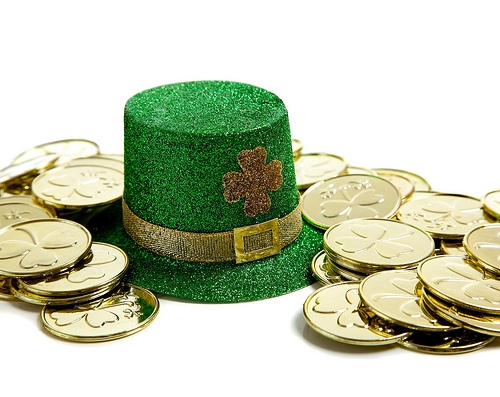
Lucky green shamrocks, leprechauns, and pots of gold – it must be St. Patrick’s Day! If you’re not Irish, how do you go about celebrating St. Patrick’s Day? It’s easy: You just put on one of those tall leprechauns hats, dress in green from head to toe, and wear one of those carefree pins that say “Kiss Me, I’m Irish”. On St. Patrick’s Day, everyone is Irish, and that is the universal beauty of the holiday. Celtic pride does not discriminate.

Wondering what our team at Just 4 Kids Pediatric Dentistry is doing to celebrate March 17th? Well, we’ve thought about doing everything from handing out lucky gold coins (you know, the fake ones that are made of chocolate) to shamrock stickers. Maybe we’ll even give away green toothbrushes and floss! You’ll never know unless you come in to see Dr. Wendy Tang and Dr. Amy Bellamy !

All kidding aside, St. Patrick’s Day is an important cultural and religious holiday. There are lavish parades and church services across Ireland on March 17th. Over time, however, the holiday has developed into a day to observe Irish culture in general. In places like England and Canada, where there is a large Irish Diaspora, the holiday has greater significance than other countries. From the street parades of Montreal to the annual three-day festival of celtic music and culture in Manitoba, it is a day of celebration, and many Canadians of Irish descent will cook up a traditional meal of corned beef and cabbage.

So, to all of you with Irish ancestry, and to all of you who have decided to be Irish for the day, our office wishes you a Happy St. Patrick’s Day. Good luck looking for a pot of leprechaun gold, which is said to exist at the end of the rainbow. However, keep away from those sugary Lucky Charms; sweet cereals might taste good, but your kids’ teeth might not be feeling too lucky if they eat it for breakfast every day. Have a great St. Paddy’s Day!

The History and Mythology of the Tooth Fairy

March 10th, 2021

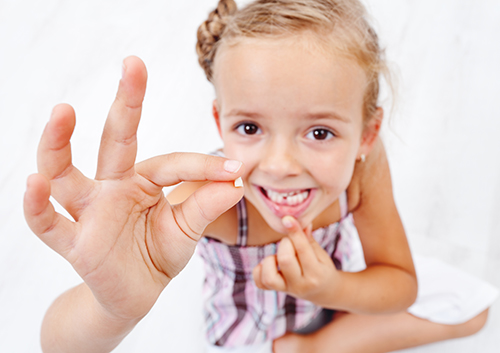
While the last baby teeth generally aren’t lost until age ten or 11, most children stop believing in the tooth fairy by the time they're seven or eight. Of course, children are more than happy to play along with the game when there’s money at stake! While it is impossible to know what the tooth fairy does with all those teeth (are they labeled and stored like museum pieces in a giant fairytale castle?), it is possible to trace the history and myth of the tooth fairy to several cultures and traditions. Dr. Wendy Tang and Dr. Amy Bellamy and our team learned about some interesting myths about the tooth fairy!

The Middle Ages

Legend has it that Europeans in the Middle Ages believed a witch could curse someone by using their teeth, so it was important to dispose of baby teeth correctly. Teeth were swallowed, buried, or burned. Sometimes baby teeth were even left for rodents to eat. Despite being pests, rodents were valued for their strong teeth; it was generally believed a tooth fed to a rodent would lead to the development of a healthy and strong adult tooth.

Eighteenth Century France

The tooth fairy myth began to show more characteristics of a conventional fairytale in 18th century France. La Bonne Petite Souris, a bedtime story, tells the strange tale of a fairy that changes into a mouse to help a good queen defeat an evil king. The mouse secretly hides under the evil king’s pillow and defeats him by knocking out his teeth.

Scandinavian Lore

So, why does the tooth fairy leave money under the pillow? The idea of exchanging a tooth for coins originated in Scandinavia. Vikings paid children for a lost tooth. Teeth were worn on necklaces as good luck charms in battle. While the idea of exchanging a tooth for coins quickly spread throughout the rest of Europe, a fierce, horn-helmeted Viking is far cry from the image of a fairy collecting teeth.

While the tooth fairy as children know her today didn’t make an appearance until the 1900s, tooth myths and rites of passage have existed in numerous cultures since the dawn of time.

What are dental sealants, who should get them, and how long do they last?

March 3rd, 2021

Dental sealants are an excellent way to protect children’s teeth from tooth decay by coating them with a thin plastic material. Their teeth look and feel like normal, but they are protected from plaque build-up and decay early on. Dr. Wendy Tang and Dr. Amy Bellamy and our staff recommend sealants as a preventive measure for children before any decay appears on their teeth.

Who should get dental sealants?

Dental sealants are intended for young children as soon as their first teeth come in. Decay is most common in the molars, so taking your child to Just 4 Kids Pediatric Dentistry for sealants right when you see the molars grow in gives your child the best chance to fight tooth decay.

A child’s first set of permanent molars grow in between ages five and seven, while the second permanent molars come in between 11 and 14 years of age. Some teens and adults who don’t have tooth decay may get sealants as well, but it is less common.

How long do dental sealants last?

Once the sealant has been placed on the teeth, it lasts up to ten years. Expect to have Dr. Wendy Tang and Dr. Amy Bellamy check the sealant at every visit to our Surrey, BC office, which should be twice a year. We will look at the sealant and determine if it needs to be replaced.

What is the process of getting sealants?

Applying sealants is a simple, pain-free procedure that is done quickly at Just 4 Kids Pediatric Dentistry. There is absolutely no effect on the tooth structure from sealants.

For starters, the teeth are cleaned carefully, then dried with an absorbent material. A mild acid solution is applied to them to roughen them slightly. This is done so the sealant can bond properly to the teeth. Then the teeth are rinsed and dried, and the sealant material is painted on and dried with a special light.

Molars are susceptible to decay early on, which is why sealants are an important treatment to get for your children’s first set of teeth.

Mon 8:00am to 4:00pm Tue 8:00am to 4:00pm Wed 8:00am to 4:00pm Thu 7:30am to 5:00pm Fri 8:00am to 4:00pm