Our Blog

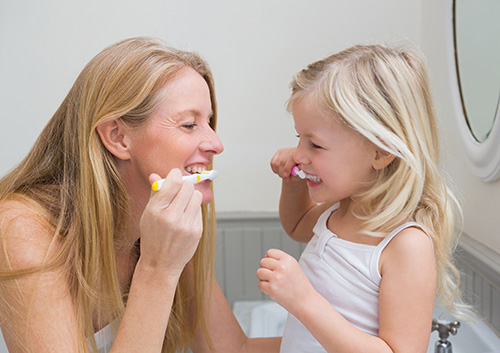
Dental Fear in Children: Brought on by parents?

July 21st, 2021

Two studies – one conducted in Washington State, and whose findings were published in the Journal of Pediatric Dentistry in 2004, and another conducted in Madrid, Spain, and whose findings were reported in 2012 in Science Daily, reinforce earlier findings that show a direct relationship between parental dental fear and that of their children.

The Washington study looked at dental fear among 421 children whose ages ranged from 0.8 to 12.8 years. The children were all patients at 21 different private pediatric dental practices in Western Washington State. The Spanish study looked at 183 children between the ages of seven and 12, and their parents in Madrid.

The Washington study used the Dental Sub-scale of the Child Fear Survey Schedule. The survey responses came from either parents, or other parties charged with taking care of the children. The people responsible for each child filled out the survey, which consisted of 15 questions to which answers were given based on the child’s level of fear. The scale used was one to five, with one meaning the child wasn’t afraid at all, and five indicating the child was terrified. The maximum possible points (based on the greatest fear) was 75.

Spanish researchers found that like past studies, there is a direct connection between parental dental fear levels and those of their kids. The most important new discovery from the study conducted in Madrid, was that the more anxiety and fear a father has of going to the dentist, the higher the fear levels among the other family members.

Parents, but especially fathers, who suffer from fear of going to the dentist and fear of dental procedures in general pass those fears on to every member of the family. While parents may not feel like they have control over those fears, the best way to help your child understand the importance of going to the dentist is by not expressing your fears in front of them – or around the rest of the family.

Dr. Wendy Tang and Dr. Amy Bellamy and our team understand that some patients are more fearful than others when it comes to visitingour Surrey, BC office. We work hard to make our practice as comfortable for our patients, both children and adults.


How can I protect my child's teeth during sports?

July 14th, 2021

Sports are great for children for a variety of reasons. Children can develop their motor skills, learn how to solve conflicts and work together, and develop their work ethics. As a parent, you may recognize the benefits of sports, but also naturally worry about your child’s health and safety. Your job goes beyond providing a water bottle and making sure your child follows the rules of the game.

Although you may not think of your child’s teeth first when you think about sports, accidents can happen that affect your children’s teeth. A stray hockey stick, an errant basketball, or a misguided dive after a volleyball are examples of ways a child could lose a tooth. In fact, studies show that young athletes lose more than three million teeth each year.

Becoming a Better Athlete to Protect Teeth

Becoming a better athlete involves refining skills, learning the rules of the game, and being a good sport. These components are not just about winning. They are also about safety. Young athletes who are better ball-handlers and who are careful to avoid fouls and penalties are less likely to have harmful contact with the ball, teammates, or opponents. Children who are better roller-bladers are less likely to take a face plant into the blacktop, and more likely to save their teeth. Being a good sport and avoiding unnecessary contact is one way to protect teeth.

Proper Protective Equipment for Teeth

If your child is in a sport that poses a high threat to teeth, it is essential for your child to wear a mouthguard. Mouthguards fit your child’s mouth and consist of soft plastic. Dr. Wendy Tang and Dr. Amy Bellamy can custom fit a mouthguard if generic ones are uncomfortable. While children may resist wearing a mouthguard initially, your persistence in insisting that they wear it should be enough to convince them. A helmet or face mask provides additional protection.

While prevention is best, rapid treatment can improve the situation if your child does happen to lose a tooth during sports. Rapid implantation can work in about ten percent of cases. To learn about ways to save a lost tooth, contact our Surrey, BC office.

Summer Dental Health? Get into the Swim of It!

July 7th, 2021

On a sizzling hot day, there’s not much that makes us happier than heading to the water for a quick swim, some gentle laps, or even a rousing game of water polo. And this being a sizzling hot dental blog, we are happy to offer some tips on how to make your summer swim good for your dental health as well as your mental health!

  • Mouthguards

You might use your mouthguard all the time—for biking, or basketball, or skiing. But in the pool? Absolutely! Anyone who has played water polo knows what a physical workout it is. Elbows! Hard tosses! Collisions! And it’s not just pool sports. Water-skiing on the lake, surfing in the ocean—anywhere humans and solid objects are involved, tooth and jaw injuries are possible. Don’t spend valuable summer hours tending to a cracked or broken tooth as a result of sports accidents.

And, unlikely though it seems, even hanging by the pool can be hazardous to your smile. Hard concrete edges wait to greet surfacing divers. Slippery cement and tiles surrounding the pool are the downfall of many a swimmer running to jump back into the water. Be aware of possible dental dangers, and use a mouthguard as a great proactive way to avoid them.

  • Swimming Pools & Chlorine

Ah, the smell of chlorine! We all want to know that swimming pools are as clean as they can be, and one method of keeping them that way is with the addition of antimicrobials to the water. But too much exposure to chemicals can cause enamel erosion, or even a condition called “swimmer’s calculus.” Swimmer’s calculus is recognized by a hard, brownish, tartar deposit that appears on the front teeth of swimmers who spent a lot of hours in the pool. It’s a cosmetic problem, but one that’s difficult to get rid of without a professional cleaning. If you’re a competitive swimmer, or simply someone who spends many hours a week in treated water, give us a call if you notice hard-to-remove discoloration or tooth sensitivity.

  • Retainers

Different people have different opinions on whether or not your retainer should be exposed to the chlorine in pool water. (Or the salt in saltwater or the bacteria in lake water.) Ask us for ours! But you’re best off leaving it in your bag or locker, anyway, because retainers can be easily lost in the water. They might be able to survive a swimming pool, but a lake or ocean rescue is very unlikely. Just remember to put your retainer in a case, in a safe spot, and replace it when you’re out of the water for the day.

Enjoy your time on the water, and don’t forget to schedule an exam with Dr. Wendy Tang and Dr. Amy Bellamy and a professional cleaning if you haven’t been in the office for a while. If you do have a dental problem or an accident, give our Surrey, BC office a call immediately. We want to make sure you dive in to summer fun with a healthy, beautiful smile!

I brush my teeth regularly. Why do I need to floss?

June 23rd, 2021

Brushing your teeth regularly is one of the most crucial parts of maintaining good oral health, and perhaps the most fundamental, however, there are also other elements involved. Flossing, for instance, is also vital; some experts would say, and Dr. Wendy Tang and Dr. Amy Bellamy and our team would agree, that it holds just as much importance as brushing your teeth. To give you a better idea of why, here are some reasons that flossing is so vital to your oral health.

Getting in-between the Teeth

While brushing your teeth effectively cleans all of the areas of your teeth that are visible, or otherwise not touching, flossing is vital because it reaches all of the areas between your teeth that you cannot see, and subsequently cannot clean using a toothbrush. These areas are among the most sensitive and vulnerable parts of your mouth because they are most susceptible to plaque and tartar buildup.

Reducing Bad Breath

It is not uncommon for someone who brushes their teeth once or twice a day to still have bad breath. The reason being is that bad breath is often created by smelly bacteria that lives in between your teeth, as well as other areas of your mouth that are not accessible using a toothbrush. And that is why flossing is one of the best ways to reduce or eliminate bad breath. Still skeptical? Try flossing your teeth with unscented floss, then smell it after, that awful scent is the source of your bad breath. Coupled with frequent brushing of your teeth, you will find that flossing can really help that stinky breath.

Brushing your teeth twice a day is hard enough, add flossing on top and it can be difficult to establish a regular habit. However, doing so is totally worth it; just look at the aforementioned reasons why. Use these for motivation the next time you don’t feel like flossing, and let us know if it worked at your next visit to our Surrey, BC office.

Mon 8:00am to 4:00pm Tue 8:00am to 4:00pm Wed 8:00am to 4:00pm Thu 7:30am to 5:00pm Fri 8:00am to 4:00pm