
Our Blog

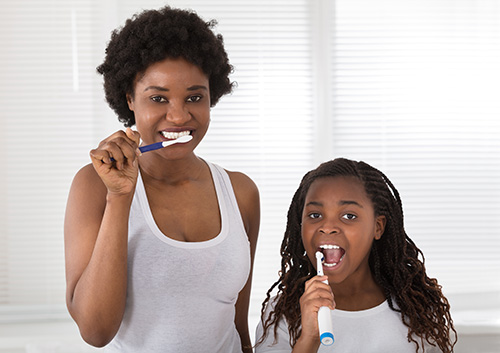
Make Brushing Teeth Fun!

June 21st, 2023

It’s understandable that kids would rather be playing outside or watching their favorite movie instead of doing a “boring” task like brushing their teeth. But there are ways to make brushing fun for your son or daughter, and encourage healthy oral hygiene habits early on! Dr. Wendy Tang and Dr. Amy Bellamy and our team have a few tricks that may help.

Game time

What child doesn’t love a good game? Try to turn brushing time into a game, whether by playing hide-and-seek or singing your child’s favorite song while he or she brushes for two minutes.

Kids also love rewards, so awarding them stickers after a good brushing can encourage them to do a good job every time. You might even tell your child that five stickers will earn a special treat or fun activity at the end of the week.

Fun accessories

Lots of toothbrush options can add something exciting to your child’s daily brushing routine. Toothbrushes that light up tend to be a popular choice with young kids. The same goes for toothbrushes shaped like your child’s favorite animal or cartoon character.

Teaching your kids about how long they should brush each time can also be fun. Let them have the special responsibility of setting a timer for two minutes before they start to brush.

The Great Toothpaste Experiment

Lots of kids can be picky eaters and that can the case with toothpaste flavors. Set aside a time to sample several different flavors, the way they’ve probably tried various flavors at the ice cream shop! Just make sure to be very clear that they shouldn’t swallow the toothpaste.

With your help, your child can easily develop healthy brushing habits over time. If you can find ways to make it fun, it can be an enjoyable experience for both of you!

Call Dr. Wendy Tang and Dr. Amy Bellamy at our Surrey, BC office for more fun tips or to make an appointment today!

Creating a Dental Home

June 21st, 2023

As a parent, you know how important a happy, relaxed atmosphere is when it comes to making your child feel at home. We would like to make our Surrey, BC practice your dental home, where you and your family enjoy the best of dental care in a warm and welcoming environment.

What makes a dental home?

  • It’s Welcoming

From your child’s first visit, we strive to make you both feel at ease. Our office is designed to be a happy, entertaining, and relaxing place, and our staff is trained in making little ones feel calm and secure. We want to have a lasting relationship, and we want you and your child to feel welcomed back whenever you return.

  • It’s Familiar

We recommend visiting our office for the first time by the time of your child’s first tooth or first birthday. Our early visits are designed to make your child familiar with what a dentist does and how a dentist helps keep children healthy. Regular preventative care will keep those little teeth in great shape, and, if your child has a cavity that needs filling or requires any other dental procedure, we will have a history together and a familiar place to experience an unfamiliar treatment.

  • It’s Comfortable

We use state-of-the-art dentistry to make sure your child has the best and most comfortable treatment as a patient, and we also consider the psychological aspect of each visit for your particular child. We are experienced in dealing with children who might feel anxious and working with them to overcome their worries. Part of our job is to make each visit a happy one, so your child is always comfortable visiting us.

  • It’s Ongoing

We want to establish a relationship that will last through the years. Continuity of care means that we are able to follow your child’s dental development during those active growing years and the transition from primary to permanent teeth. We provide not only dental health education, treatment, and preventive care, but can track any changes or potential problems before they become major issues. In case of a dental emergency, we will be familiar with your child personally, and with a dental history at hand.

Give Dr. Wendy Tang and Dr. Amy Bellamy a call to talk about your child and how we can make the dental experience a positive one from the very beginning. When it comes to establishing a happy and healthy foundation for your child’s dental history, there’s no place like our dental home!

Just What Is a Cavity, Anyway?

June 15th, 2023

The grownups in your life encourage you to brush and floss, eat healthy foods, and visit us in the dental office for exams and cleanings. Why? Because we all want to help you prevent cavities.

So you might be wondering, just what are cavities? How do we get them? What do they do to our teeth? How can we prevent them? Let’s talk!

Our teeth need to be strong to bite and chew. That’s why they are protected by a coating called enamel, which is made up of very hard minerals. Enamel is the strongest part of our bodies—stronger even than our bones. But this doesn’t mean nothing can hurt it! And cavities, also called tooth decay, are one of the most common dangers facing our enamel.

So, what are cavities?

A cavity is a hole in your tooth enamel. If your tooth is not cleaned and repaired when a cavity is small, this hole can grow bigger until tooth decay reaches the inside of your tooth. Enamel doesn’t heal when it’s damaged, so you need to see a dentist to make your tooth healthy again.

How do we get cavities?

Bacteria are tiny little germs. Many kinds of bacteria live in our bodies, and some of them are quite helpful. The bacteria that cause cavities are not. These unhelpful bacteria join with our saliva and very small pieces of the food we’ve chewed to make a sticky film called plaque.

Like other living things, the bacteria in plaque need food. They get that food from the foods we eat, especially sugars and starches. As they eat, they change these sugars and starches into acids, and these acids attack the minerals that keep enamel hard and strong.

Because plaque sticks to our teeth, bacterial acids are able to make weak spots in enamel if the plaque isn’t brushed away. If you see a white spot on your tooth, which could mean that your enamel is losing minerals, and getting weaker.

What do cavities do to our teeth?

Over time, weak spots can grow bigger until there’s a hole in the enamel surface. If the cavity in your enamel is small, you might not notice it at first. But cavities can become wider and deeper, and even break through enamel to reach the inside of your tooth.

The inside of each tooth holds pulp, the part of your tooth that keeps it healthy. If tooth decay spreads to the pulp, it can cause more damage and infection, so it’s important to treat a cavity right away.

Dark spots on your enamel, a toothache, pain when you drink something hot or cold or when you bite down—these can be clues that you have a cavity, and you should visit us for an exam.

How can you prevent cavities?

Even better than treating a cavity is preventing one. Let’s make a list of some helpful do’s and don’ts for cavity prevention:

  • Do: Feed yourself foods that are good for you.

Foods like milk and cheese and many dark green vegetables have lots of calcium and vitamin D to help keep your enamel strong.

  • Don’t: Feed bacteria foods that are good for them.

Sugar and simple starches like potato chips are the kinds of foods bacteria like best, because they are easy to break down. This means more acids to attack your enamel.

This doesn’t mean you should never enjoy a treat! But eating lots of starchy snacks and drinking sugary sodas means more plaque, and more plaque can mean more cavities. If you’re eating something starchy or sweet, it’s a good idea to brush or rinse afterward.

  • Do: Brush at least twice a day, for at least two minutes, with fluoride toothpaste.

This is the best way to get rid of plaque, which builds up every day. And fluoride toothpaste even helps make your enamel stronger.

  • Don’t: Forget to floss.

Flossing takes a while to learn to do well, but it’s very important. Flossing helps prevent cavities between the teeth and near the gums.

  • Do: Visit our Surrey, BC office for exams and cleanings.

Not only will we look for cavities, we’ll let you know the best way to brush and floss so you can get your teeth their cleanest. We even have special coatings called sealants that can protect your teeth from plaque.

  • Don’t: Feel bad if you get a cavity!

Some people are more likely to get cavities than others, even when they brush just right and eat healthy foods. If you have a cavity, we can remove decay and repair your tooth with a filling.

And one last thing to do: talk to Dr. Wendy Tang and Dr. Amy Bellamy if you have any questions about the best ways to protect your teeth from cavities. We have lots of suggestions to help you take care of your healthy, beautiful smile!
Dental Sealants for Baby Teeth?

May 31st, 2023

Perhaps you’ve heard your friends talking about dental sealants, and how well they prevent cavities. And as soon as your child’s permanent molars come in, you absolutely plan to make an appointment at our Surrey, BC office for this treatment. But should you also be concerned with your child’s baby teeth? Could they benefit from sealants too?

Even though those beautiful baby teeth are going to be replaced with permanent teeth, they should still be protected. Primary teeth help with speech development, enable your child to develop proper chewing and eating habits, and serve as place holders so that permanent teeth can erupt in the correct place. That’s why you’ve been so careful to help your child brush and floss twice daily, and make regular visits to our office for exams and cleanings.

But some teeth are just harder to keep clean with regular brushing than others. Primary molars, just like permanent ones, have depressions and grooves on the chewing surfaces. These grooves collect bacteria and food particles that are hard for bristles to reach, providing a perfect opportunity for cavities to develop in those little molars.

Cavities are not the only problem which can affect primary teeth. Because baby teeth have thinner layers of protective enamel, a cavity can actually reach the pulp (the center of the tooth) more quickly, leading to pain and potential infection.

While baby teeth can be treated, with fillings, restorations, and even stainless steel crowns, preventing tooth decay is always our first, best choice. And dental sealants are recommended by the American Academy of Pediatric Dentistry and the American Dental Association as one of the most effective ways to prevent cavities in both baby teeth and adult teeth.

Dental sealants are safe and effective.  Sealants are thin coatings (usually a plastic resin or other dental material) that cover a molar’s grooves and depressions, making it impossible for bacteria and food particles to collect there. Applying them is a simple, pain-free process.

Each tooth will be examined first. If we find any signs of decay starting, we will gently treat that area before applying the sealant. After the tooth is cleaned and dried, an etching solution will be brushed on to the surface area being sealed. This etching roughens the surface so that the sealant will hold to the tooth more effectively. A thin coat of the sealant is then painted on and hardened under a curing light.

That’s all there is to it! Sealants typically last from three to five years, and some last even longer. Keep up your regular careful brushing and flossing, and we will monitor the condition of the sealants at each exam.

Talk to Dr. Wendy Tang and Dr. Amy Bellamy about dental sealants. We’ll let you know if your child can benefit from the procedure even before those baby teeth give way to permanent ones. It’s never too early to prevent tooth decay!

Mon 8:00am to 4:00pm Tue 8:00am to 4:00pm Wed 8:00am to 4:00pm Thu 7:30am to 5:00pm Fri 8:00am to 4:00pm