
Our Blog

Valentine's Day History

February 10th, 2016
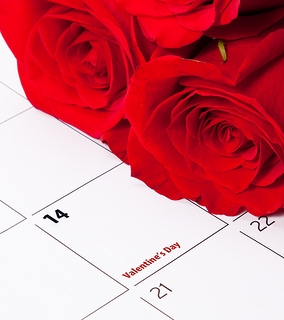
Valentine’s Day is best known as a celebration of love in all its forms. Pink hearts, red roses, and cute greeting cards adorn every surface you see. What many people don’t realize is that the modern Valentine’s Day celebration arose from a religious holiday.

St. Valentine’s Day was originally celebrated as a religious feast day in honor of early Christian martyrs. Three martyrs named Valentine were honored: a priest in Rome, the persecuted bishop of Interamna (a town in central Italy), and a saint martyred in Africa. This saint’s day was celebrated throughout Christendom, although it was removed from the Roman Catholic Calendar of Saints in 1969.

The origin of Valentine’s Day as a holiday for lovers began with Geoffrey Chaucer in his 1382 poem “Parlement of Foules.” Chaucer wrote, “For this was on Saint Valentine’s Day, when every bird cometh there to choose his mate,” and the modern romantic holiday was born. William Shakespeare and other writers mentioned Valentine’s Day as a day of love.

Valentine’s Day as we know it came about in the early 19th century. In Victorian England, printers began manufacturing small numbers of cards with romantic verses, lace, ribbons, and other frills. Anonymous Valentine’s Day card were a popular way for young lovers to exchange romantic sentiments in an otherwise prudish time. As the 19th century progressed, printers began mass manufacturing Valentine’s Day cards. People in the United States give an estimated 190 million valentines every year, and up to one billion if you count children exchanging cards at school! With the rise of the Internet, Valentine’s Day e-cards have become a popular mode of communication, with millions of e-cards sent each year.

The other items associated with Valentine’s Day include chocolate and flowers. The tradition of giving chocolates has been around for decades, and Richard Cadbury created the first box of Valentine’s Day chocolates nearly 150 years ago. Today, purchases of chocolate total over $1 billion in the United States alone, with 35 million heart-shaped boxes sold each year. Loved ones also exchange flowers, with red roses being associated with Aphrodite, the Greek goddess of love. On Valentine’s Day itself, florists sell nearly 200 million stems of roses.

Although many people dismiss Valentine’s Day as a commercialized “Hallmark holiday,” it is beloved to couples and romantics across the United States and other countries. The team at Just 4 Kids Pediatric Dentistry wants to remind all patients that no matter what your celebratory plans, February 14th can be a wonderful day to celebrate the loved ones in your life. Happy Valentine’s Day!


Do I lose my wisdom if I lose my wisdom teeth?

February 3rd, 2016

The third molars have long been known as your “wisdom teeth,” because they are the last teeth to erupt from the gums – usually sometime during the late teens to early twenties. This is a time in life that many consider an “age of wisdom”; hence the term, “wisdom teeth.”

Extracting the third molars does not have any effect on your actual wisdom … and Dr. Tang and our staff are sorry to say that holding on to them can’t make you smarter, either. So if you somehow feel that you became wiser and smarter when your wisdom teeth appeared, chalk it up to age rather than teeth.

In fact, you may just be showing how smart you are by having your wisdom teeth removed. Mankind once relied on the wisdom teeth to replace teeth that were damaged or missing, thanks to a poor diet. But dietary changes and advances in modern dentistry make it possible for many people to hold on to their teeth for many decades, which eliminated the need for third molars.

For many people, wisdom teeth cause nothing but problems: becoming impacted, irritating surrounding gum tissue, or even causing other teeth to become crooked or overlap. By removing them, patients often enjoy a lower risk of decay, infection, and aesthetic complications.

So rest assured that extracting your wisdom teeth will have no effect on your immediate or long-term intelligence.

Pediatric Dentistry Q&A

January 27th, 2016

Today, Dr. Tang and our team at Just 4 Kids Pediatric Dentistry thought we would answer some of the most frequent questions about pediatric dentistry and oral health we hear from parents.

What constitutes a “healthy, balanced diet” for my child?

A healthy, balanced diet contains all the nutrients your child needs to grow, including one serving each of fruits and vegetables, breads and cereals, milk and dairy products, and meat, fish and eggs per day. Make sure your child limits snacking in between meals and limits how frequently they consume food or beverages that contain sugar, which is known to cause tooth decay. Besides pastries, cookies, and candy, sugars are usually found in processed foods such as crackers, cereals, and soda, as well as in condiments like ketchup.

Should my kid give up all foods that contain sugar?

Absolutely not, we simply recommend choosing and serving sugars sparingly. A food with sugar is safer for teeth if it is eaten with a meal, not as a snack. When your child chews during his or her meal, the saliva produced helps neutralize the acids that are found in sugary and starchy foods. Foods that are not easily washed away from your child’s teeth by saliva, water, or milk have more cavity-causing potential.

What causes cavities?

Many types of bacteria live in our mouths—some good, some bad. When these bacteria come into contact with sugary foods left behind on your child’s teeth after eating, acids are produced. These acids then attack the enamel, and eventually eat through the enamel and create holes in the teeth, which Dr. Tang and our team call cavities, or caries.

How can I help my child avoid cavities?

This is a great question that we hear a lot. Make sure that your child brushes his teeth twice a day with fluoride toothpaste. Flossing daily is also important, as flossing can reach spots between the teeth that brushing simply can’t. And finally, we encourage you to schedule regular appointments with Dr. Tang at our Surrey, BC office so that we can check the state of your child’s teeth and gums, as well as provide a professional cleaning to protect him or her from cavities and gum disease.

What is the best way to clean my baby’s teeth?

We recommend you clean your baby’s gums after feedings with a damp, soft washcloth. This is even before your baby’s first tooth appears. As soon as his or her first tooth does appear, you may begin using a toothbrush with soft bristles and a small head. You can most likely find a toothbrush designed for infants at your local drugstore or ask us for one during your next visit.

What should I do if my child has a toothache?

First, we recommend rinsing the irritated area with warm salt water and placing a cold compress on his or her face if it is swollen. If you have any at home, give your child acetaminophen for any pain, rather than placing aspirin on the affected teeth or gums. Finally, give us a call as soon as possible to schedule an appointment with Dr. Tang.

We hope that helps! Please give us a call if you have any questions or ask us next time you visit our office for your child’s appointment with Dr. Tang! If you have any other questions, or would like to schedule an appointment, we would love to hear from you.

Thumb Sucking, Pacifiers, and Your Baby's Teeth

January 20th, 2016

Sucking is a common instinct for babies and the use of a pacifier or their thumb offers a sense of safety and security, as well a way to relax.

According to the Canadian Academy of Pediatric Dentistry, the majority of children will stop using a pacifier and stop sucking their thumb on their own between the ages of two and four years of age. Prolonged thumb sucking or use of a pacifier can have dental consequences and needs be taken care of sooner, rather than later.

Many dentists favor pacifier use over thumb sucking because it makes it easier for parents to control and even limit the use of a pacifier. If thumb sucking lingers, the same strategies used to break the baby from using the pacifier can be used for thumb sucking.

Precautions

  • Try to find "orthodontically correct" pacifiers, as they may reduce the risk of dental problems.
  • Never dip a pacifier in sugar or honey to calm the baby.
  • Give your baby a bottle of water at bedtime, never juice.

Dental Complications

Long term pacifier use can lead to an assortment of dental complications including:

  • The bottom teeth leaning inward
  • The top teeth slanting outward
  • Misalignment of the baby’s jaw

The risk of any or all of these things happening is greatly increased if thumb sucking and pacifier use is sustained after the baby’s teeth start to come in.

Breaking the Thumb Sucking and Pacifier Habit

Most toddlers and children will stop sucking their thumb or using a pacifier between the ages of two and four on their own. However, if intervention is necessary here are a few tips to help your child break the habit:

  • Slowly decreasing the use of a pacifier can be effective for many children. This method does not work very well with thumb sucking.
  • Thumb sucking can be more difficult to break. Dr. Tang may recommend using an over the counter cream that you put on the child’s thumb; it doesn’t taste good and usually does the trick.
  • Rewards can also help with the process.
  • If these simple commonly used strategies do not work, there are oral devices that will prevent a child from sucking their thumb or a pacifier.

Talk to Dr. Tang and our team, as we have many tricks up our sleeves that will be effective in breaking your child’s thumb sucking or pacifier use.

Mon 8:00am to 4:00pm Tue 8:00am to 4:00pm Wed 8:00am to 4:00pm Thu 7:30am to 5:00pm Fri 8:00am to 4:00pm