Our Blog

Tips to Help You Beat the Heat This Summer

June 1st, 2016

The dog days of summer are upon us, and with the temperatures soaring, our team at Just 4 Kids Pediatric Dentistry wants you to be extra careful about sun safety when you’re out and about. Check out this incredibly helpful article on the Ten Summer Safety Tips for Kids, courtesy of Discovery.

Dr. Wendy Tang and Dr. Amy Bellamy and our team also encourage you to always have a bottle of water handy when heading out into the sun.

We hope you’re having a great summer! Let us know what you're up to below or on our Facebook page!

Are thumb sucking and pacifier habits harmful for a child’s teeth?

May 25th, 2016

Depending on how long the thumb sucking or constant pacifier use continues, and how aggressively the child sucks a thumb or the pacifier, it can indeed be an oral health issue. Generally speaking, most children outgrow these behaviors or are able to be weaned off them successfully sometime between ages two and four. When children wean off the behaviors in this age range, long-term damage is unlikely.

Why Kids Suck Their Thumb or Pacifier

Both of these habits are actually a form of self soothing that your child likely uses when he or she is very upset, or feeling stressed, confused, frustrated, or unable to properly express the emotions. If your son or daughters is a regular thumb sucker, or the child wants to use the pacifier almost constantly, it is best to try to taper off these habits at a young age.

If your child continues to suck a thumb or request a pacifier consistently after leaving toddler-hood, this could be a source of concern, and it should be addressed with Dr. Wendy Tang and Dr. Amy Bellamy and our staff. We will be able to evaluate your child's mouth to look for any signs of damage such as palate changes or teeth shifting.

Say Goodbye to Old Habits

In the event that your child is quite reluctant to give up a pacifier or thumb-sucking habit, there are a few things you can do to discourage these behaviors.

  • When you notice that your child is not using a pacifier or sucking a thumb, offer effusive praise. This type of positive reinforcement can be much more effective than scolding the child.
  • Consider instituting a reward system for giving up the habit. If the child goes a certain amount of time without this behavior, award him or her for being such a “big kid.”
  • Employ the help of older siblings or relatives that your child admires. When a child’s role model says that he or she stopped sucking thumbs at a certain age, your child is likely to try to emulate that.

Five Fun Snacks for Healthy Teeth

May 18th, 2016

Snacks can taste good and give your child’s energy a boost, but they can also be bad for teeth. Sugary, sticky snacks, such as candy, cookies, and snack cakes can lead to tooth decay if eaten regularly between meals. Still, there are plenty of fun snacks for healthy teeth.

The trick when selecting snacks is to avoid too many added sugars and refined carbohydrates that stay on the teeth and give bacteria a chance to ferment and produce acid from them, which can lead to tooth decay. In addition, snacks should provide nutrients to support a healthy mouth. These are five fun snacks you can feel good about giving to your child.

1. Yogurt and cereal.

Yogurt contains calcium, which is an essential mineral for strong and healthy teeth. Select plain yogurt or yogurt flavored with real fruit, rather than flavored yogurt that is sweetened with added sugar. We recommend choosing a whole-grain cereal, which is less likely to lead to dental caries. Choose a low-sugar or unsweetened cereal to avoid accidentally making the snack as sugary as a candy bar.

2. Tuna and whole-wheat crackers.

Canned tuna contains vitamin D, which is an essential vitamin for helping your body absorb and use calcium. Whole-wheat crackers are natural sources of antioxidants for a strong immune system, and they’re lower in refined carbohydrates than white crackers.

3. Bell pepper strips and hummus.

Red, yellow, and green bell peppers are excellent sources of vitamin C, which is an antioxidant. Vitamin C is also a good choice for supporting regeneration or maintenance of healthy gum tissue. Vitamin E is another antioxidant, and it also supports a healthy immune system. A strong immune system is protective against infections, such as bacterial infections associated with gum disease.

4. Turkey and cheese roll-ups.

Turkey is carbohydrate-free, so it doesn’t leave residues of sugars on teeth for bacteria to ferment. Lean ham is another good choice. Low-fat cheddar, mozzarella, or Swiss cheese is a good source of calcium as well as protein. For a more substantial snack that’s still low in carbohydrates and sugar, add a few celery sticks.

5. Peanut butter and carrots.

Peanut butter is another source of vitamin E. Carrots provide vitamin A, which is essential for a strong immune system. You can also substitute cauliflower or broccoli florets for the carrots, and ranch dressing for the peanut butter, and still have a snack that’s fun to eat and good for your child’s teeth.

For more great snack tips, ask a member of our Surrey, BC team at your child’s next appointment!
The History and Mythology of the Tooth Fairy

May 11th, 2016

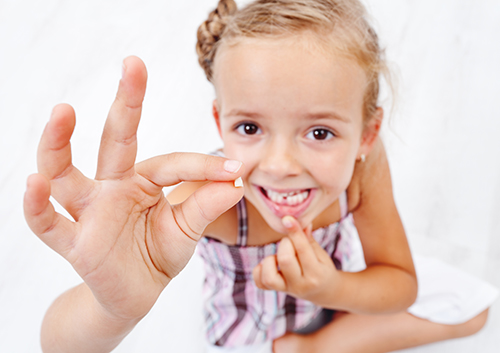
While the last baby teeth generally aren’t lost until age ten or 11, most children stop believing in the tooth fairy by the time they're seven or eight. Of course, children are more than happy to play along with the game when there’s money at stake! While it is impossible to know what the tooth fairy does with all those teeth (are they labeled and stored like museum pieces in a giant fairytale castle?), it is possible to trace the history and myth of the tooth fairy to several cultures and traditions. Dr. Tang and our team learned about some interesting myths about the tooth fairy!

The Middle Ages

Legend has it that Europeans in the Middle Ages believed a witch could curse someone by using their teeth, so it was important to dispose of baby teeth correctly. Teeth were swallowed, buried, or burned. Sometimes baby teeth were even left for rodents to eat. Despite being pests, rodents were valued for their strong teeth; it was generally believed a tooth fed to a rodent would lead to the development of a healthy and strong adult tooth.

Eighteenth Century France

The tooth fairy myth began to show more characteristics of a conventional fairytale in 18th century France. La Bonne Petite Souris, a bedtime story, tells the strange tale of a fairy that changes into a mouse to help a good queen defeat an evil king. The mouse secretly hides under the evil king’s pillow and defeats him by knocking out his teeth.

Scandinavian Lore

So, why does the tooth fairy leave money under the pillow? The idea of exchanging a tooth for coins originated in Scandinavia. Vikings paid children for a lost tooth. Teeth were worn on necklaces as good luck charms in battle. While the idea of exchanging a tooth for coins quickly spread throughout the rest of Europe, a fierce, horn-helmeted Viking is far cry from the image of a fairy collecting teeth.

While the tooth fairy as children know her today didn’t make an appearance until the 1900s, tooth myths and rites of passage have existed in numerous cultures since the dawn of time.

Mon 8:00am to 4:00pm Tue 8:00am to 4:00pm Wed 8:00am to 4:00pm Thu 7:30am to 5:00pm Fri 8:00am to 4:00pm