
Our Blog

Dental X-rays and Your Child

May 13th, 2020

We’re parents, so we worry. It comes with the job description! That’s why we make sure our children use toothbrushes with soft bristles and apply just the right amount of fluoride toothpaste. That’s why we make regular appointments with their dentists for preventive care and examinations. And that’s why we want to know all about the X-rays that are used in our children’s dental exams.

First of all, it’s reassuring to know that the amount of radiation we are exposed to from a single dental X-ray is very small. A set of bitewing X-rays, for example, exposes us to an amount of radiation that is approximately the same as the amount of radiation we receive from our natural surroundings in a single day.

Even so, dentists are especially careful when children need X-rays, because their bodies are still growing and their cells are developing more rapidly than adults. And children often have different dental needs than adults, which can require different types of imaging.

In addition to the usual X-rays that are taken to discover cavities, fractures, or other problems, young patients might need X-rays:

  • To confirm that their teeth and jaws are developing properly
  • To make sure, as permanent teeth come in, that baby teeth aren’t interfering with the arrival and position of adult teeth, and that there’s enough space in the jaw to accommodate them
  • To plan orthodontic treatment
  • To check the progress and placement of wisdom teeth

So, how do dentists make sure your child’s radiation exposure during X-ray procedures is as minimal as possible?

Radiologists, the physicians who specialize in imaging procedures and diagnoses, recommend that all dentists and doctors follow the safety principal known as ALARA: “As Low As Reasonably Achievable.” This means using the lowest X-ray exposure necessary to achieve precise diagnostic results for all dental and medical patients.

Moreover, radiologists are devoted to raising awareness about the latest advances in imaging safety not only for dental and medical practitioners, but for the public, as well. With children in mind, pediatric radiologists from a number of professional associations have joined together to create the Image Gently Alliance, offering specific guidelines for the specific needs of young patients.

And because we are always concerned about the safety of our patients, dental associations around the world, including the American Academy of Pediatric Dentistry, the American Dental Association, the American Dental Hygienists’ Association, the Canadian Academy of Pediatric Dentistry, and the Canadian Dental Hygienists Association, are Image Gently Alliance members.

The guidelines recommended for X-rays and other imaging for young people have been designed to make sure all children have the safest experience possible whenever they visit the dentist or the doctor. As dental professionals, Dr. Wendy Tang and Dr. Amy Bellamy and our team ensure that imaging is safe and effective in a number of ways:

  • We take X-rays only when they are necessary.
  • We provide protective gear, such as apron shields and thyroid collars, whenever needed.
  • We make use of modern X-ray equipment, for both traditional X-rays and digital X-rays, which exposes patients to a lower amount of radiation than ever before.
  • We set exposure times based on each child’s size and age, using the fastest film or digital image receptors.

We know your child’s health and safety are always on your mind, so you’re proactive about dental care. And your child’s health and safety are always on our minds, too, so we’re proactive when it comes to all of our dental procedures available at our Surrey, BC office.

Please free to talk with Dr. Wendy Tang and Dr. Amy Bellamy about X-rays and any other imaging we recommend for your child. We want to put your mind at ease, knowing that X-rays will be taken only when necessary, will be geared to your child’s age and weight, and will be used with protective equipment in place. Because ensuring your child’s dental health and safety? That comes with our job description!
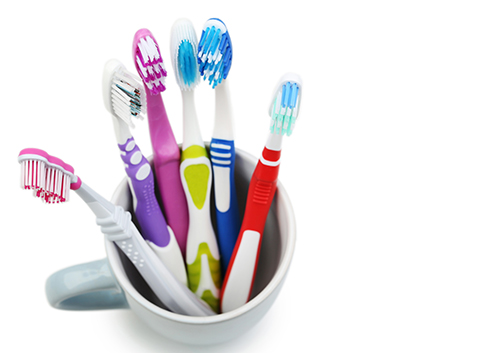

Toothbrush Arts and Crafts

May 6th, 2020

When you replace your old toothbrush every three or four months with a new model, you accomplish three things:

  • You keep your teeth cleaner (frayed brushes don’t clean as well)
  • You protect your gums (you won’t be scrubbing harder to get your teeth clean)
  • You add another toothbrush to your growing collection of used brushes

If creative recycling is one of your talents, you might have already discovered how handy repurposed brushes are for cleaning delicate or hard-to-reach spaces around the house. But those old brushes don’t have to spend their entire existence cleaning! Here are some ideas from Dr. Wendy Tang and Dr. Amy Bellamy to give a new, artistic life to your old, uninspired toothbrush.

  • Splatter Painting

As your bathroom mirror can confirm, toothbrushes are great for splattering. Why not put those bristles to creative use by adding color bursts to canvas, wooden picture frames or boxes, fabric, cards, gift wrap and more? Just dip the tips of the bristles into the paint, point them toward your surface, and brush your finger over the head. For more formal effects, splatter paint over your favorite stencils on paper or fabric. Or work your magic by splattering around a stencil for a dramatic silhouette.

  • Children’s Painting

Your child might find it great fun to use an old toothbrush to create new works of art. The easy-to-grip handle and wide bristles are perfect for painting those first masterpieces. Splatter painting is also a wonderful art activity for children—but be prepared for some clean-up!

Texturizing Clay Pieces

Whether you work in potter’s clay, polymer clay, or Play-Doh, an old toothbrush can provide any number of interesting textures to your piece. Press the bristles into the clay for a sophisticated stippled background, or brush long gentle strokes for a striated effect.

  • Carpentry

Wood glue creates strong bonds when you are joining edges, mitering corners, or fitting mortise and tenon joints. It also creates a sticky mess when you use your fingers, a wood or plastic spreader, or one of your good paint brushes. For any gluing jobs or joinery, try a toothbrush for greater control and easy application.

  • Jewelry Making

If you work with jewelry pieces, you know that sometimes there are nooks and crannies that are almost impossible to clean or polish. Try a gentle brush with an old toothbrush and the recommended polish for your piece—but do keep brushes away from the delicate surface of pearls. And for the boldly creative, why not use your toothbrush itself as jewelry? There are online instructions out there for transforming that old brush into a colorful bangle bracelet.

In turns out that there’s a second career waiting for your toothbrush after all! Make sure to clean your toothbrushes thoroughly before using them in another role. After that, let your creativity run wild—including your creative recycling! It’s just another way you are crafting a more beautiful environment for all of us.

Caring for Your Dog’s Teeth

April 29th, 2020

It may come as a surprise to learn that dogs, like humans, have both baby and adult teeth. Most dogs, unlike humans, have all of their adult teeth by the time they are seven months old, so it’s time to start looking after their dental health when they are still puppies.

While dogs generally don’t develop cavities, periodontal disease is the one of the most common diseases affecting dogs. Periodontal disease starts when the bacteria in your pet’s mouth form plaque. The plaque can harden into tartar, and, if plaque and tartar spread under the gum line, can be responsible for a number of serious problems. Veterinarians warn that tooth loss, tissue damage, bone loss and infection can be the result of periodontal disease. Professional dental treatment is important if your dog is suffering from periodontal disease, and your vet can describe the options available to you. But the time to act is before disease develops. Let’s bone up on some preventative care!

Brushing

There are brushes and toothpastes designed especially for your dog. Train your puppy from an early age to open his mouth to allow you to examine his teeth and gums. (This will also come in handy if you ever need to give him medicine.) Most dogs will accept brushing, and toothpastes come in dog-friendly flavors. Human toothpaste should never be used because it contains cleaners and abrasives that should not be swallowed by your pet. There are also dental wipes available that can be used once and thrown away. Your vet can advise you how to ease your pet into a brushing routine.

Gels and Rinses

Whether you rub an antiseptic gel on your dog’s teeth or squirt an antiseptic rinse into his mouth, these formulas can reduce the build-up of plaque. Not all dogs take to the taste of these solutions, but in general they are safe and effective. Ask your vet for recommendations if you would like to try this method.

Diet

Several dietary products offer anti-plaque ingredients or a kibble shape designed to reduce the formation of plaque. Talk to your vet for the best possible diet and nutrition suggestions for your unique pet.

Chew Toys

Chewing can help reduce plaque build-up if done consistently, and chew toys should be chosen for tooth and digestive safety. Some animal-based products and hard plastic toys are so rigid that they can cause damage to teeth or gums, so be sure to look for safe toys.  Dogs shouldn’t be left alone with toys due to choking or swallowing hazards—if the chew toy becomes small enough to cause choking, or your dog is swallowing large chunks that might not be digestible, time to replace it.

Your veterinarian is the best resource for maintaining your dog’s health and developing a dental routine both you and your pet can live with. When your four-legged friend goes for his next check-up, ask your vet what you can do to keep him and his smile fetching for a long, long time.

Just What Is Plaque?

April 22nd, 2020

When you were younger, and you brushed your teeth without any help for the first time, it was a big step. It meant you’d learned the right way to brush to keep your teeth and gums healthy. But why does brushing help keep you healthy? Let’s talk about plaque!

  • What Is Plaque?

Plaque rhymes with “attack,” and that’s just what it does to your teeth. If you don’t brush for a few days (which is a bad idea!), plaque is the reason for that fuzziness you feel when you run your tongue over your teeth.

If your teeth feel fuzzy, that means that plaque has been building up for a while. But how does it begin?

Plaque is made up of saliva, bits of food, other liquids, and tiny little organisms called bacteria. While most of the bacteria in our bodies don’t bother us—and some even help us—the bacteria in plaque are not so helpful.

Plaque starts with a type of bacteria that stick to the teeth, loosely at first, and then more strongly. Within hours, they join with saliva, bits of food, and other bacteria and bacterial products to make a very sticky film. This film is plaque.

Why is it so important to brush plaque away every day? As Dr. Wendy Tang and Dr. Amy Bellamy will tell you, plaque can cause cavities and hurt your gums.

  • How Does Plaque Cause Cavities?

Bacteria are like us—they need food. The bacteria in plaque especially like the sugars we eat. (That’s why you shouldn’t have too much junk food or candy in your diet.) Bacteria change these sugary building blocks into a kind of acid, and because plaque is sticky, the acids stay on your teeth.

These acids breaks down the enamel, that hard coating which covers teeth. Tiny weak spots can grow and become holes in the enamel. We call these holes cavities, and your dentist can repair them by cleaning away the decay and putting a filling in your tooth to protect it.

But it’s best to prevent cavities from ever starting by brushing and flossing. Even though plaque is sticky, it is easy to brush away when you do it every day.

  • How Does Plaque Hurt Your Gums?

The gums surround our teeth and help protect them, but they are also delicate. When plaque builds up, it can irritate your gums.

You might notice that your gums get red, feel sore when you brush, or look puffy. You might have bad breath that doesn’t go away. All these are signs that your gums are reacting to the plaque around them.

The good news is that careful brushing and flossing can usually fix these problems. Talk to Dr. Wendy Tang and Dr. Amy Bellamy about taking good care of your gums.

  • Can We Fight Plaque?

Yes! From the time you were small and learned how to brush, you’ve been learning how to fight plaque.

  • Brush at least twice a day for two minutes, and be sure to brush all around each tooth and the gums.
  • Floss to remove plaque from where it hides between the teeth and near the gums.
  • Visit our Surrey, BC office for a cleaning, to remove plaque from hard-to-reach places and to learn the best ways to brush and floss.

As soon as you finish brushing, plaque starts to build up again. But no need to worry! Keep brushing, flossing, and visiting us for regular cleanings, and all your careful work will be rewarded will a beautiful, healthy smile.

Mon 8:00am to 4:00pm Tue 8:00am to 4:00pm Wed 8:00am to 4:00pm Thu 7:30am to 5:00pm Fri 8:00am to 4:00pm