Our Blog

What should I use to clean my baby’s teeth?

January 20th, 2021
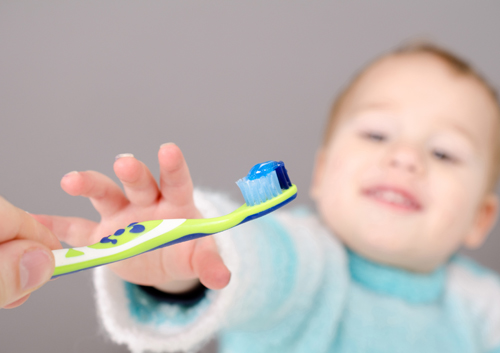
You might think babies don’t need to brush their teeth, especially when they don’t have any. But by starting good habits like brushing when your child is young, you can lay the foundation for them to continue those good habits into adulthood.

When do I start?

The best time to start brushing your baby’s teeth is before he or she has any. Develop the habit of wiping your baby’s gums with a wet, soft washcloth or gauze every day. There is no need to use toothpaste, just wrap the gauze or cloth around your finger, moisten it with a little water, and gently rub it over the gums.

This helps your little one get used to brushing while it eliminates bacteria in the mouth that can harm emerging teeth. You don’t need to apply a lot of pressure or even take very long: just a quick, gentle rub over the gums will do it.

What do I use?

When your child’s teeth begin to come in, you will need to switch from a cloth to a baby toothbrush. Find one that has a grip big enough for your hand, but a head that is small enough to maneuver easily in your infant’s mouth.

You don’t need to use any toothpaste until your son or daughter is about a year old. Even then, though, you’ll want to use just a tiny amount: about the size of a grain of rice. When your toddler is about two years old, you can use a pea-sized amount.

By around six years of age, your child will probably rinse and spit without your help. At that point, you may want to introduce a child-friendly fluoride mouthwash.

How do I do it?

Your child probably won’t be able to brush his or her teeth alone until about the age of five or six. This means that you will need to do it. To brush your child’s teeth, gently use the brush over all the teeth and gums, even areas where the teeth have not come in yet.

As your child grows and becomes more independent, you can allow him or her to hold the toothbrush while you guide your child’s progress. Make sure you talk to your child while you are brushing, and explain why you brush: what you are doing and how you are doing it.

In addition to regular visits with Dr. Wendy Tang and Dr. Amy Bellamy, instilling good oral health habits in your child early on will ensure a lifetime of good dental health.


How can parents help prevent tooth decay?

January 13th, 2021

Children are born with a set of primary teeth – 20 to be exact – that help them learn to chew and speak, and develop enough space in the jaw for the permanent teeth that will appear several years later. Kids are especially susceptible to decay, which can cause pain and tooth loss – a problem that could interfere with oral development. As a parent, it is important that you take proactive steps to keep your child’s teeth as healthy as possible.

Bottles and “Sippie Cups”

One of the biggest culprits of childhood tooth decay is poor diet. This begins as early as a few months old, when children are often allowed to go to bed with bottles and “sippie cups” of milk or juice. The sugars in these beverages – even natural sugars – can steadily decay the teeth.

Dr. Wendy Tang and Dr. Amy Bellamy and our staff suggest serving children milk and juice only at meal times, and limiting juice intake to just a few ounces per day. If your child becomes thirsty between meals or likes to go to bed with a bottle, serve water during these times.

Hygiene

As a parent, you can establish healthy dental habits long before your child’s first tooth erupts. Start by gently wiping your baby’s gums with a clean wash cloth during the first months of life. By age one, graduate to an appropriately sized toothbrush with fluoridated toothpaste, and brush at least twice a day.

Dental Visits

Dental visits should start young and continue on a regular basis throughout your child's life. Dr. Wendy Tang and Dr. Amy Bellamy and our staff recommend parents bring their children to Just 4 Kids Pediatric Dentistry for the first time no later than the child’s first birthday. Initial visits concentrate on parental education, while later visits may include thorough cleanings and fluoride treatments as your child grows.

For more information about keeping your child’s teeth cavity-free, contact our Surrey, BC office to schedule a dental consultation and checkup.

How do I know if I have dry mouth?

January 6th, 2021

Dry mouth, also medically known as xerostomia, is the condition of not having enough saliva, or spit, to keep your mouth wet. There are many ways to keep dry mouth at bay, including:

  • Brushing your teeth after every meal with a fluoride toothpaste
  • Flossing every day after a meal
  • Avoiding tobacco, as well as drinks containing alcohol or caffeine
  • Avoiding dry foods, as well as foods containing high salt, acid, spice, or sugar levels
  • Drinking water frequently or sucking on ice chips
  • Using a humidifier at night

Please call our convenient Surrey, BC dental office to learn more about dry mouth, or ask us during your next visit!

New Year's Eve

December 30th, 2020

Watching the clock tick down the final seconds until midnight, many of us- Just 4 Kids Pediatric Dentistry included- feel nostalgic about the passing year and hopeful about the new one to come. New Year’s Eve is one of the most widely celebrated holidays in the world, with over-the-top celebrations taking place in dozens of countries. The Gregorian calendar, which is widely used in Western nations and around the world, was implemented in 1582. Since that time, December 31st has marked the final day of the year, with midnight heralding the beginning of a brand new year. In the United States, New Year’s Day is a public holiday; government offices, schools, public organizations, and many businesses are closed for the day. Ponder the following fun facts as you think about your plans for the holiday:

  • Approximately one billion people watch the New Year’s Eve ball drop in Times Square, New York City. This televised event is one of the most iconic New Year’s celebrations in the world. For many years, watching the ball drop meant tuning in to Dick Clark’s Rockin’ New Year’s Eve, an iconic television special dear to the hearts of many viewers.
  • The idea for the New Year’s Eve ball came about because of a citywide ban on fireworks. Before 1907, when fireworks became illegal in New York City, celebrations included an elaborate fireworks show. The large, glittering, illuminated ball was developed as an alternative. Although the first ball was heavy at 700 pounds, the modern New Year’s Eve ball is made of Waterford crystal and tips the scale at six tons!
  • The top five New Year’s resolutions are: to lose weight, quit smoking, get a new job, return to school, or increase personal savings. However, approximately 88% of New Year’s resolutions fail. But don’t let that discourage you! Resolutions are most likely to succeed when they are clear, achievable goals. Setting out a concrete plan to achieve your resolution also boosts your chances of success.
  • Eating black-eyed peas on New Year’s Day is said to bring good fortune in the new year. Collard greens, cabbage, and ham hocks are also considered lucky foods to enjoy. Just steer clear of the chicken or turkey dinners; eating poultry is a bad omen for the year to come.

Whether you plan to stay in Surrey, BC, or head out into the crowds to watch the ball drop in Times Square, New Year’s Eve is a time to enjoy friends and family. Send your loved ones well wishes for the New Year, and look for that special someone to share a midnight kiss with for good luck!

Mon 8:00am to 4:00pm Tue 8:00am to 4:00pm Wed 8:00am to 4:00pm Thu 7:30am to 5:00pm Fri 8:00am to 4:00pm