Our Blog

Bells and Whistles for Your Bristles?

October 5th, 2022
Modern dentistry has made the most of today’s technological innovations. And we’ve come a long way from the fraying sticks our ancestors used as toothbrushes.

On the other hand, while it’s a lot better than a fraying stick, the manual toothbrush model you’ve used for years might be ready for an upgrade. Should you take this opportunity to try out some new technology offering all the bells and whistles? Let’s answer that question by asking a few more questions.

Happy with your manual brush?

If you like your manual toothbrush and it’s doing the job, by all means, stick with it. But even your old familiar brush can evolve:

  • There are lots of bristle options, but soft bristles are almost always the way to go. Medium and hard bristles can be too abrasive for your enamel.
  • Heads come in a variety of sizes, so make sure the head size is comfortable. You want to be able to maneuver to reach every tooth surface, which a too-large brush head just can’t do.
  • Try a different handle shape if you’re having trouble maneuvering and keeping a firm grip.
  • Change your brush regularly. Brushes are effective for about three months before the bristles start to fray and breakdown. This is a good opportunity to experiment with different brands and styles.

Does your old brush suit your current needs?

Different types of manual toothbrushes are available for effective and comfortable brushing when you need options that a typical brush doesn’t provide:

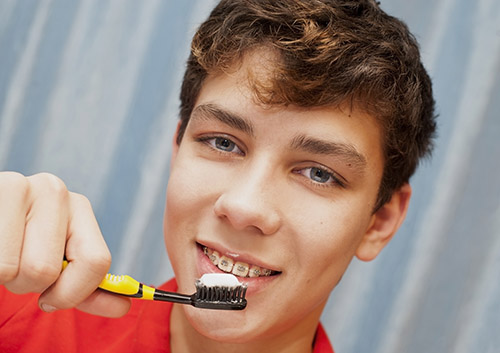
  • Special orthodontic toothbrushes are designed with bristles trimmed to fit around brackets and wires and smaller heads to reach into tight places.
  • For those with mobility issues, brushes with larger or easy-grip handles make cleaning more comfortable.
  • Brushes with extra-soft bristles are available if you have enamel erosion or sensitive gums.
  • Because many women find their gums become especially sensitive during pregnancy, there are brushes designed especially for moms-to-be.

Is it time to go electric?

If you haven’t tried an electric toothbrush before, you might find that getting braces is a great reason to give one a spin.

  • Electric toothbrushes can outperform manual models. A dedicated brusher might manage hundreds of brushstrokes for each minute of brushing, while an electric brush can provide thousands. If, despite your regular brushing, you have plaque build-up, an electric brush might be a good alternative to your manual brush.
  • Models are available which can alert you when you’re brushing too hard—which is important for your enamel if you’re a heavy-handed brusher.
  • If you tend to *think* you’ve brushed for the recommended two minutes, but have *actually* brushed 32 seconds, some electric brushes come with timers!
  • There are tapered electric orthodontic brush heads designed just for people with braces.
  • Electric brushes have bigger handles and can be easier to grip.

Is your current brush doing the job?

So, should you stick with the familiar toothbrush that’s worked for you all these years, or take this opportunity to try out some new technology that offers all the bells and whistles? The answer is clear: the right brush for you is the one that works!

If your regular checkups show that plaque is under control, you’re doing just fine with the brush in hand. If you or Dr. Wendy Tang and Dr. Amy Bellamy notice plaque buildup, it’s time to consider making some changes. Whether it’s a question of tools, techniques, or time spent brushing, your Surrey, BC dental team has the answers you need for state-of-the-art dental hygiene.


Non-Nutritive Sucking Behavior

September 28th, 2022

“Non-nutritive sucking behavior”? That’s a mouthful—literally! This term describes behaviors such as thumb sucking and pacifier use, which are generally healthy, self-soothing activities for infants and toddlers. But, if followed too long, this comforting habit can have uncomfortable consequences for your child’s dental health.

When children are nursed or bottle-fed, placing a nipple in the mouth helps trigger the sucking reflex, enabling the flow of milk or formula. This is called nutritive sucking, because nourishment is the goal. The sucking reflex is so essential that it develops even before birth. And while the purpose of this reflex is nourishment, it provides other benefits as well.

For small children, sucking can be a comfort mechanism to help them cope with stressful situations and calm themselves. That’s why you often see your child sucking on a pacifier, toy, thumb, or fingers when feeling overwhelmed or tired. Non-nutritive sucking behavior, or NNSB, refers to these habits: sucking without nutritional benefit.

Such habits are extremely common in young children. Most children stop sucking their thumbs or pacifiers between the ages of two and four, and often even earlier. But if your child hasn’t, it’s a good idea to talk to Dr. Wendy Tang and Dr. Amy Bellamy about easing your child away from this familiar habit before the permanent teeth start to arrive.

Why? Because when sucking behavior lasts too long, it can have orthodontic consequences. Just as the gentle pressure of braces or aligners can help shift teeth and jaws into the proper alignment, the pressure from sucking thumb and pacifier can push growing teeth and jaws out of alignment.

  • Studies have shown a clear link between NNSB and malocclusions, or bite problems. These include overjets (protruding upper teeth), open bites (where the upper and lower teeth don’t make contact when biting down), and crossbites (where one or more upper fit teeth inside lower teeth).
  • As young bones are still growing, prolonged, vigorous sucking can affect the shape and size of a child’s palate and jaw.
  • When the teeth are pushed out of alignment, difficulties with pronunciation, such as lisps, can develop.

Sucking habits can be difficult to give up. If your child is still self-comforting with the help of thumb or pacifier past age three, and certainly if you’ve noticed any changes in teeth or speech, there are several gentle, positive steps you can take to protect your child’s dental health.

  • Talk to Dr. Wendy Tang and Dr. Amy Bellamy about strategies for weaning your child from pacifier and thumb, as well as possible comforting substitutes. Your healthcare team can offer suggestions for making this transition as easy as possible for your child—and for you!
  • Discuss recommendations you’ve found in books or online which might be a good match for your child’s personality. Whatever you decide on, whether it’s a gradual phasing out, small rewards, a goals chart, or any other method, use positive reinforcement and plenty of encouragement.
  • Set easy goals at the beginning, such as going thumb-free while playing a game, or enjoying a favorite video, or any stress-free activity, to give your child a feeling of accomplishment to build on.
  • Be proactive with orthodontic health. One good idea is to schedule an orthodontic visit when your child is around the age of seven—or earlier if you notice problems with tooth alignment, speech, or bite.

Thumb sucking and pacifier use can be important, instinctive sources of comfort for very young children. And, of course, NNSB is not the only cause of childhood malocclusions. Many bite problems are genetically based and/or affected by the size and shape of your child’s teeth and jaws.

But eliminating the preventable oral health problems caused by prolonged non-nutritive sucking behaviors—that’s an opportunity we can’t afford to pass up. After all, wanting to ensure healthy, confident smiles for our children is instinctive parental behavior!

Shark Teeth

September 21st, 2022

It seems like sharks are everywhere these days—on land, sea, and air(waves). A halftime show meme gone viral. A week of summer TV devoted to our favorite apex predators. And who doesn’t have “Baby Shark” playing in their heads all day once they’ve heard it? But are we jumping the shark to discuss this topic in a dental blog?

Not at all! Because today, we’re going to talk about shark teeth—just not the ones you might be expecting.

One of the expected sights when a shark opens its mouth are those rows and rows of shiny shark teeth. Sharks can grow from two to 15 rows of teeth at any one time (and some sharks have even more). This means sharp new teeth are always ready to replace any shark tooth which is lost, broken, or worn out.

An unexpected sight? When children point to their new adult tooth or teeth coming in—right behind their still-firmly rooted baby teeth! This double set of teeth is called “shark teeth,” and, while it certainly might come as a surprise, it’s not all that uncommon. But why do children develop shark teeth at all?

After all, baby, or primary, teeth have small roots, and are designed to come out easily when the adult teeth start arriving. When a permanent tooth starts to erupt, it pushes against the root of the baby tooth above it. This pressure gradually dissolves the root of the primary tooth, and with nothing to anchor it, it’s now loose, wiggly, and ready to fall out. That’s why baby teeth often look like they have no roots at all when they eventually wiggle free.

Sometimes, though, the roots of a primary tooth don’t break down, which means baby teeth stay right where they are. It also means that the permanent teeth have to erupt somewhere else—usually behind those stubborn little baby teeth.

Shark teeth can first appear around the ages of five to seven when the permanent front teeth start arriving, or several years later, when the adult molars begin to come in. Any extra teeth in one small jaw naturally cause concerns about crowding and misalignment, especially when those extra teeth are molars. Fortunately, treatment is generally uncomplicated.

If the baby tooth is loose, time (and wiggling) might take care of the problem. But if the primary tooth or teeth just won’t budge, even after several weeks, it’s a good idea to schedule a visit with Dr. Wendy Tang and Dr. Amy Bellamy—especially if your child is experiencing pain or discomfort.

An extraction is often suggested when a baby tooth has overstayed its welcome. Because of its smaller root, extracting a primary tooth is usually a straightforward procedure. Dr. Wendy Tang and Dr. Amy Bellamy can let you know all the details, and can discuss sedation options if they’re appropriate for your child.

Whether baby teeth are left to fall out on their own, or given some assistance, most often your child’s permanent tooth will start moving to its proper position as soon as the space is available.

Unlike sharks, we don’t have an endless supply of replacement teeth, so it’s understandable to worry when you see anything unexpected. If you want to know more about shark teeth, or if you have any concerns, don’t hesitate to call our Surrey, BC office for expert advice.

Oral Health Tips: Travel Edition

September 14th, 2022

When you leave on a trip, you probably double-check that evrything’s ready: your clothes are packed, your ticket is handy, and your passport waits patiently on top of your bag or in a special pocket.

The same level of preparedness should apply with regard to caring for your oral health when you’re about to leave home for a while. Whether you’re jumping in the car for a weekend camping trip or flying halfway across the globe for a longer stint, the tips below will help you keep your teeth healthy whil you’re away.

Prepare Ahead of Time

The key to maintaining good oral hygiene during travel is preparation. Schedule a regular dental appointment so your teeth are freshly cleaned and ready before you leave. This can identify potential issues that might cause problems while you’re away.

If you have any items on a dental “to-do” list, such as wisdom tooth removal, replacement of a filling, or orthodontic adjustment, it’s a good idea to get those procedures completed before your trip.

En Route

If you’re stuck on a long flight or trekking far into the woods, you might find yourself where there’s no sink or even a toothbrush at hand. We speak for everyone when we say that nothing is worse than a mouth that feels, shall we say, less than fresh.

A lemon wedge or Granny Smith apple slice can help freshen up your breath when you’re in need of a quick fix. Rinsing your mouth thoroughly with water can help to wash away bacteria that causes cavities and reduce that gritty sensation. If you’ve got toothpaste, put a dot on your finger or a damp washcloth to serve as a makeshift toothbrush.

Nowadays, travel-sized dental products are available at most grocery stores and pharmacies. You can find travel toothbrushes, mini mouthwashes, and pocket-sized floss to slip into your travel bag.

Colgate makes disposable mini-toothbrushes called Wisps that can help you freshen up when you may not have access to a regular toothbrush. Packing a few extra dental supplies may also be a good idea in case one gets damaged or lost.

At Your Destination

Traveling abroad can expose you to unfamiliar conditions. Some countries have compromised water sources that will make you extremely ill if ingested, even from the tiny amount of water with which you wet your toothbrush.

Minimize that risk and keep bottles of water on hand instead for rinsing your mouth and toothbrush. If your toothbrush comes in contact with contaminated water, swapping it out for a new one is the safest option.

Storing your toothbrush properly is necessary to prevent bacteria from growing on it. Place your brush in a Ziploc bag when you’re on the go and allow it to breathe once you get to a temporary destination.

Traveling near or far should be an enjoyable experience. Dental issues shouldn’t be a source of worry on your vacation. As long as you’re prepared and take precautions, your teeth can stay healthy even when they’re out of the country!

Of course, if you have any questions, don’t hesitate to contact our Surrey, BC office.

Mon 8:00am to 4:00pm Tue 8:00am to 4:00pm Wed 8:00am to 4:00pm Thu 7:30am to 5:00pm Fri 8:00am to 4:00pm