Our Blog

What should I use to clean my baby’s teeth?

November 23rd, 2022
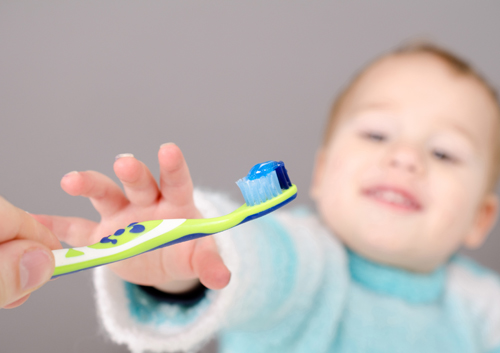
You might think babies don’t need to brush their teeth, especially when they don’t have any. But by starting good habits like brushing when your child is young, you can lay the foundation for them to continue those good habits into adulthood.

When do I start?

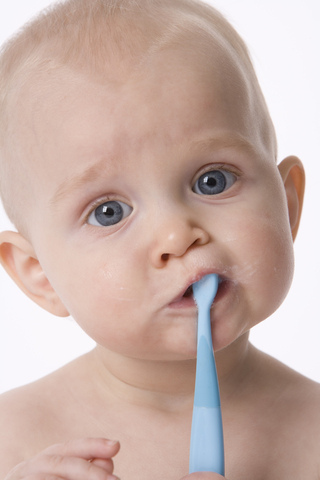
The best time to start brushing your baby’s teeth is before he or she has any. Develop the habit of wiping your baby’s gums with a wet, soft washcloth or gauze every day. There is no need to use toothpaste, just wrap the gauze or cloth around your finger, moisten it with a little water, and gently rub it over the gums.

This helps your little one get used to brushing while it eliminates bacteria in the mouth that can harm emerging teeth. You don’t need to apply a lot of pressure or even take very long: just a quick, gentle rub over the gums will do it.

What do I use?

When your child’s teeth begin to come in, you will need to switch from a cloth to a baby toothbrush. Find one that has a grip big enough for your hand, but a head that is small enough to maneuver easily in your infant’s mouth.

You don’t need to use any toothpaste until your son or daughter is about a year old. Even then, though, you’ll want to use just a tiny amount: about the size of a grain of rice. When your toddler is about two years old, you can use a pea-sized amount.

By around six years of age, your child will probably rinse and spit without your help. At that point, you may want to introduce a child-friendly fluoride mouthwash.

How do I do it?

Your child probably won’t be able to brush his or her teeth alone until about the age of five or six. This means that you will need to do it. To brush your child’s teeth, gently use the brush over all the teeth and gums, even areas where the teeth have not come in yet.

As your child grows and becomes more independent, you can allow him or her to hold the toothbrush while you guide your child’s progress. Make sure you talk to your child while you are brushing, and explain why you brush: what you are doing and how you are doing it.

In addition to regular visits with Dr. Wendy Tang and Dr. Amy Bellamy, instilling good oral health habits in your child early on will ensure a lifetime of good dental health.

Can my child really avoid tooth decay?

November 16th, 2022

Great question! Yes, in fact, tooth decay is preventable! Decay, which is caused by sugars left in your child’s mouth, can turn into an acid, which in turn can break down his or her teeth. Children are at high risk for tooth decay for a simple reason: many children and adolescents tend to be lax in their oral hygiene habits.

So, how can your child prevent tooth decay?

  • Start early. After the age of two, brush your child’s teeth with fluoride toothpaste twice a day. And, if possible, clean between the teeth with dental floss at least once a day, preferably before they go to bed.
  • Don’t allow your little ones to eat after cleaning teeth at bedtime, as salivary flow decreases while they sleep and their teeth become vulnerable to cavities.
  • Do not allow your little ones to nibble food or sip drinks continuously, and keep in mind that a low-sugar diet also helps keep tooth decay at bay. Allow time between meals for saliva to neutralize acids and repair the teeth.
  • Drinking water frequently throughout the day can also reduce the possibility of new cavities forming.
  • Dental sealants can also protect your children’s teeth from cavities. Sealants, which are applied to the chewing surfaces of molars, act as a shield between the tooth and harmful bacteria.

Finally, make sure your child visits Just 4 Kids Pediatric Dentistry approximately every six months for a checkup and routine cleaning! Please give us a call at our Surrey, BC office.

When should I begin brushing my baby's teeth?

November 16th, 2022

One question our team at Just 4 Kids Pediatric Dentistry hear all the time is, “When should I start brushing my baby’s teeth?”

You should begin regular cleanings even before your baby has teeth. After each breast feeding (or bottle-feeding) use a clean, damp washcloth to gently rub your baby’s gum tissue. You may wrap the material around one finger to make it easier to remove any food bits from your baby’s mouth.

When your baby’s first tooth comes in, switch to a baby toothbrush. Look for special baby toothbrushes in your drugstore; they have just a few bristles and are very soft. There are even brushes shaped like finger puppets that fit over the tip of your pointer finger! All you need at this point is water (no toothpaste yet).

After a few more teeth appear, you may start using toothpaste, but you only need a tiny bit, and make sure it doesn’t contain fluoride for the first two years. From the beginning, have your little one practice spitting the toothpaste out after brushing. That way, he or she will already have the good habit of spitting when you switch to fluoride toothpaste, which should never be swallowed.

If you have any questions about caring for your baby’s teeth, or to schedule an appointment at our convenient Surrey, BC office, please contact Just 4 Kids Pediatric Dentistry.

How Do We Clean Your Child’s Teeth?

November 9th, 2022

Baby teeth are very important to your child’s present and future dental health, so we want to help you keep your child free from cavities and gum disease even before those permanent teeth erupt. That’s why we recommend professional cleanings at our Surrey, BC office—to keep plaque and tartar from damaging little teeth and gums.

But a dental cleaning might be a bit stressful for young children, especially when they’re not used to the steps, the sounds, and the sensations of the cleaning process.

So, just as we strive to make every examination and visit a positive experience for your child, we do our best to make their cleanings a happy, stress-free time. How do we do this? With your help!

  • Preparation

A happy experience begins even before your child arrives in the office. If you are relaxed and positive before an appointment, you’ll help your child feel relaxed and positive, too.

Explaining what goes on during a cleaning even before your visit will help your child feel more comfortable when unfamiliar tools like dental mirrors, scalers, and polishing brushes are used. You can talk about your own experience, read a book together, watch a video, or find online resources to help your child understand what will happen during your visit, and why cleanings are so important for happy, healthy teeth.

Sometimes children benefit from a form of mild, conscious sedation (such as nitrous oxide) when they have special health needs or dental anxiety. If you feel this is an option we should discuss, please talk to us in advance and we’ll answer any of your questions.

  • Pre-Cleaning Examination

After being made welcome in the office and settled comfortably in the dental chair, we’ll examine your child’s teeth and gums for any signs of plaque and tartar.  A small, handled mirror is used to check out hard-to-see places behind the teeth and in the back of the mouth. Gum health is also important, and your child’s gums will be examined for any signs of gingivitis, or mild gum disease.

Plaque and tartar cause cavities and gum disease, even for young children. Finding any trouble spots will let us know where to concentrate on cleaning, and where you can help your child to brush more effectively.

  • Removing Plaque and Tartar

No matter how well a child (or an adult!) brushes and flosses, plaque can build up in some hard-to-reach spots, especially between the teeth and along the gumline. And if plaque isn’t removed within a few days, it starts hardening into tartar—and tartar can’t be brushed away.

That’s why removing tartar is a job for a dental professional. Using a special tool called a scaler, we gently scrape built-up plaque and tartar off tooth enamel (especially where it tends to accumulate behind and between teeth) and near the gumline. Sometimes an ultrasonic scaler can be used to dislodge tartar with sound waves.

Scalers can make a scraping noise and cause some pressure, and ultrasonic scalers use a stream of water as they clean. We’re happy to explain, in an age-appropriate way, why tools make these noises and how they work to clean little teeth.

  • Polishing & Flossing

After the plaque and tartar are removed, your child’s teeth will be polished with a power brush and a special gritty toothpaste. This is usually a bit noisy as well. A careful flossing and a final rinse will wash away any leftover particles or paste.

Once the teeth are cleaned, you may choose to have a fluoride treatment or a dental sealant applied to your child’s teeth.

  • After a Cleaning

Your praise and encouragement are always welcome! Giving children praise for helping keep those little teeth clean, shiny, and healthy makes them partners in the process.

How do we clean your child’s teeth? Gently. Thoroughly. Expertly. We want to make sure each cleaning is just one of the many positive dental experiences your child will have in our office. Help us make your child’s cleaning appointment stress-free with positive preparation and reinforcement, and together we’ll start your child on the path to a lifetime of shining smiles and proactive dental care!

Mon 8:00am to 4:00pm Tue 8:00am to 4:00pm Wed 8:00am to 4:00pm Thu 7:30am to 5:00pm Fri 8:00am to 4:00pm