Our Blog

Avoid Brushing After Every Single Meal!

March 1st, 2023
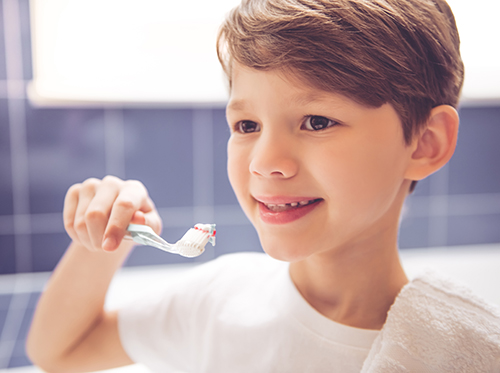
Here is some surprising yet worthwhile advice you might be hearing for the first time: Brushing can be incredibly bad for your child’s teeth if done right after eating certain foods.

Enamel is an extremely hard mineral on the exterior of each tooth. It’s actually the hardest substance in the human body: It’s even stronger than bones! Its only weakness is that acids in the food we eat can easily destroy enamel.

Healthy teeth thrive in an environment that has the proper pH balance. That ensures the mouth doesn’t start the process of demineralization—the process when alkaline turns into acid, which attacks and softens the enamel on the surface of your child’s teeth. Pores and fissures form, and that’s when the harmful bacteria go to work.

A mouth’s pH level fluctuates depending on what is eaten throughout the day. Examples of the most common highly acidic foods include citrus fruits, soda, and sugary foods. Highly acidic foods tip the balance of pH in the mouth from a healthy alkaline to a dangerous acid.

Can brushing your child’s teeth immediately after a meal lead to even more damage? The answer is yes!

Eating highly acidic foods causes your child’s teeth to be more susceptible. If your child brushes when the teeth have been weakened by acids, even more destruction can happen to the enamel. Your child’s toothbrush bristles will actually wear away some of the enamel. So it’s healthier for your child to wait at least an hour after eating or snacking to brush.

Good preventive measures to take instead of brushing after your child eats include:

  • Rinsing or drinking water
  • Chewing sugarless gum
  • Consuming dairy or non-acidic foods to conclude a meal

These practices help produce saliva, which in turn restores a healthy pH level in your child’s mouth and coats the teeth with minerals they need.

Once your child’s mouth is restored to a healthy pH level, he or she may brush normally. Keep in mind that acidic foods can weaken the enamel on the teeth and take the right measures to prevent spiking pH levels.

Still have questions? Call our Surrey, BC office and schedule an appointment for your child with Dr. Wendy Tang and Dr. Amy Bellamy.


Does Your Child Need Endodontic Treatment?

March 1st, 2023

Baby teeth come with a built-in expiration date. That charming first smile is meant to make way for a healthy, beautiful adult smile. Unfortunately, before they are ready to make way for permanent teeth, primary teeth can be affected by decay, trauma, or infection—problems which can lead to damage to the pulp within the tooth. If your dentist tells you that your child’s tooth needs specialized endodontic treatment, is treatment really that much better for your child than losing a baby tooth prematurely?

Quite often, the answer is yes!

Baby teeth do much more than serve as temporary stand-ins for adult teeth. They are essential for:

  • Biting and chewing—a full set of baby teeth helps your child develop proper chewing, which leads to healthy digestion. And chewing also helps build face and jaw muscles.
  • Speech development—primary teeth help guide speech production and pronunciation.
  • Spacing—a baby tooth serves as a place holder for the adult tooth waiting to arrive. If a primary tooth is lost too early, the remaining baby teeth may drift from their proper location. This, in turn, can cause overcrowding or misalignment of the permanent teeth when they do erupt.

Baby teeth, like adult teeth, contain living pulp tissue. The pulp chamber inside the crown (the visible part of the tooth) and the root canals (inside each root) hold nerves, blood vessels, and connective tissue. When the pulp is damaged by trauma or infected, a baby tooth can still be saved with endodontic treatment. Endodontic treatment in baby teeth can take two forms.

  • “Vital” pulp is pulp that can be saved. Vital pulp therapy uses procedures to deal with damaged pulp inside the crown, or visible part, of the tooth. Pulp therapy can be used on teeth when only the top of the pulp has been affected by decay, limited exposure, infection, or trauma, but the root pulp remains healthy. Specific treatment will depend on the nature of the pulp injury, and a crown will usually be placed over the tooth after treatment to protect it.
  • With non-vital pulp, your dentist will probably recommend a traditional root canal procedure. All of the pulp tissue will be removed from inside the crown and the roots, and the pulp chamber and root canals will then be cleaned, disinfected, shaped, and filled. Finally, because the treated tooth will be more fragile, a crown will be used to protect the tooth from further damage.

There can be good reasons for extracting a seriously damaged baby tooth, and there are situations where preserving the tooth is the best and healthiest option for your child. Discuss your options with Dr. Wendy Tang and Dr. Amy Bellamy when you visit our Surrey, BC office for the safest, most effective way to treat your child’s compromised tooth.

Losing a Baby Tooth Prematurely

February 22nd, 2023

Losing a baby tooth is often an exciting event in a child’s life. It’s a sign your child is growing up, and might even bring a surprise from the Tooth Fairy (or other generous party). But sometimes, a baby tooth is lost due to injury or accident. Don’t panic, but do call our Surrey, BC office as soon as possible.

If Your Child Loses a Tooth

It is important to see your child quickly when a baby tooth is lost through injury. The underlying adult tooth might be affected as well, so it’s always best to come in for an examination of the injured area. The Canadian Dental Association recommends that you find the lost tooth, keep it moist, and bring it with you to the office. Call Dr. Wendy Tang and Dr. Amy Bellamy immediately, and we will let you know the best way to treat your child and deal with the lost tooth.

Baby Teeth Are Important

There are several important reasons to look after your child’s first teeth. Baby teeth not only help with speech and jaw development, but they serve as space holders for permanent teeth. If a primary tooth is lost too early, a permanent tooth might “drift” into the empty space and cause crowding or crookedness.

Space Maintainer

A space maintainer is an appliance that does exactly that—keeps the lost baby tooth’s space free so that the correct permanent tooth will erupt in the proper position. The need for a space maintainer depends on several factors, including your child’s age when the baby tooth is lost and which tooth or teeth are involved. We will be happy to address any concerns you might have about whether or not a space maintainer is needed.

It is important to remember that there are solutions if the Tooth Fairy arrives at your house unexpectedly. Keep calm, call our office, and reassure your child that his or her smile is still beautiful!


Can children be at risk for developing periodontal disease?

February 22nd, 2023

Dr. Wendy Tang and Dr. Amy Bellamy and our team hear this question a lot. While many people believe periodontal disease is an adult problem, studies have indicated that periodontal disease, also known as gum disease, as well as other serious infections such as gingivitis and periodontitis, are prevalent among kids and adolescents. First, let’s identify the differences between gingivitis, periodontitis, and periodontal disease.

Gingivitis

Gingivitis is a type of periodontal disease in which only your child’s gums are affected. Characterized by swollen and red gums that bleed easily, gingivitis causes an inflammation of the gums, and is the first stage and mildest form of periodontal disease. The good news is that gingivitis is often reversible. Treatment for gingivitis includes having your child come in for a professional teeth cleaning. It also includes daily brushing, which will help eliminate plaque from the surfaces of your child’s teeth. Your child should also get in the habit of flossing daily to remove plaque and food particles wedged in the crevices between his or her teeth.

Periodontitis

If left untreated, gingivitis can progress to periodontitis, the advanced stage of gum disease that can not only damage your child’s gum tissue, but also destroy the underlying bone which supports the teeth. Eventually, teeth can become loose and may have to be removed. In some cases, the bacteria from the ensuing infection may also be distributed to other areas of the body via the bloodstream.

Periodontal Disease

Periodontal disease is a chronic bacterial infection of the gums, periodontal ligament, and bone that surround and support your child’s teeth. Periodontal disease causes gums to become red, swollen, and tender, and can even cause the gums to recede (pull away) from the teeth. If left untreated, periodontal disease can lead to tooth loss.

Having persistent at-home oral care regimen is a critical step in your child’s fight against periodontal disease. But sometimes brushing and flossing are simply not enough. Having your child’s teeth cleaned twice a year, or as recommended, is crucial.

Early diagnosis of gingivitis, periodontitis, and periodontal disease can give you and your child peace of mind. If you are concerned your child is suffering from gum disease, we recommend that you give us a call at our Surrey, BC office. We look forward to working with you and giving your child a smile to last a lifetime!

Mon 8:00am to 4:00pm Tue 8:00am to 4:00pm Wed 8:00am to 4:00pm Thu 7:30am to 5:00pm Fri 8:00am to 4:00pm