
Our Blog

Brushing Tips for Kids

October 11th, 2023
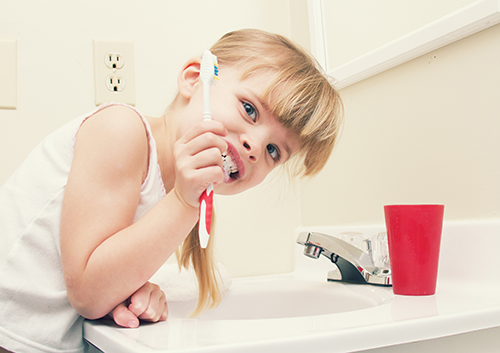
You’re all set for your happy morning and nighttime ritual. You’ve provided your son with his favorite action hero toothbrush and your daughter with her favorite flavored toothpaste. You’ve gotten them into the healthy habit of two minutes of brushing twice each day. You’ve introduced them to flossing. You have favorite brushing songs! Stickers! Gold stars! And, best of all, you’re teaching great brushing techniques.

Kids need the same basic brushing tools and skills as adults. What makes for the best cleaning?

Find the right brush

No matter how cute—or heroic—the brush, it needs to have soft bristles to protect enamel and delicate gum tissue. The head should be a perfect fit for your child’s mouth. And if the handle is easy to grip and hold, you have a winner.

Find the right toothpaste

The bubblegum flavor might appeal to your child, but it’s the fluoride that helps to prevent cavities. Talk to us about the right time to start using fluoride toothpaste and the right amount for your child’s brush.

Teach your child the angles

If your child is too young to brush alone, start geometry lessons early. Holding the brush at a 45-degree angle toward the gums will clean bacteria and plaque from the tooth surface and the gum line. And don’t forget the chewing surfaces and the insides of the teeth. When your child begins brushing on her own, coach her as she learns the best way to clean all the surfaces of her teeth.

Easy does it

Teeth and gums should be massaged, not scrubbed. Brushing too hard can damage not only tender gum tissue, but even your child’s enamel.

Learn to let go

No matter how comfortable and appealing the brush, after three or four months, it’s time for a change. Frayed bristles don’t clean as effectively, and making up for it by brushing harder isn’t the answer (see above). Also, toothbrushes can build up quite a collection of bacteria over time (see below), so a fresh brush is a must!

Everything in its place

A toothbrush should dry thoroughly between uses without touching other brushes. Placing a brush in a plastic container doesn’t let it dry and encourages bacterial growth. And a toothbrush needs its own space—touching toothbrush heads means sharing toothbrush bacteria. The best way to keep toothbrushes as dry and as germ-free as possible is to store them upright, without touching other brushes, in a clean, well-ventilated area.

Rinse and repeat

Your child should rinse his toothbrush before and after using it, and be sure to rinse his mouth as well. That should get rid of any leftover food particles brushing has removed.

Finally, keep up the good work! As you teach your child proper brushing techniques, and make sure she uses them as she grows, you are preparing her for a lifetime of great checkups with Dr. Wendy Tang and Dr. Amy Bellamy at our Surrey, BC office. Give yourself a gold star—you’ve earned it!

Treatment and Diagnosis for Your Child’s Teeth Grinding

October 11th, 2023

The habit of grinding teeth can be both painful and harmful for your children. If you discover that they are frequently grinding their teeth—a condition called bruxism—here is some helpful information on the problem, and how you can find help to put a halt to it.

How to Know if Your Child is Grinding

Sometimes, identifying a child that grinds teeth is as simple as checking in while he or she is asleep. At other times, you may not be able to readily identify the grinding problem. A few of the most common symptoms associated with bruxism include:

  • Frequent teeth grinding or clenching of the jaw (in some cases it may be more subtle; in others it may be loud enough that you can hear it)
  • Teeth that are worn down
  • Complaints of sensitive teeth
  • Pain or tightness in the jaw muscles, or an earache or other jaw pain
  • Frequent unexplained headaches

In most cases, if your children are grinding their teeth, they will do it at night. If the teeth grinding is a result of excessive amounts of stress, it may also happen during the daytime. Some of the most common reasons children grind their teeth involve:

  • Improper alignment of top and bottom teeth
  • As a response to pain, especially for tooth, jaw, or gum pain
  • Excessive stress, tension, or anger

Treatment Options for Bruxism

In many cases, children will grow out of the teeth grinding as their permanent teeth develop, replacing poorly aligned or painful baby teeth. If your child grinds his or her teeth more frequently, or you begin to notice significant damage, it may be more serious and need to be addressed by Dr. Wendy Tang and Dr. Amy Bellamy before it causes more permanent pain or problems.

In some cases, our team at Just 4 Kids Pediatric Dentistry may recommend that your child wears a protective mouthguard to prevent grinding, or work with a therapist or other specialist to develop awareness of the grinding. If the grinding is caused by stress or anxiety, it may be helpful for you to sit down and talk to your child each day about how she is feeling, and why, to help her work through the stress.

Teeth grinding can be a painful, problematic condition for some children. However, a combination of parental vigilance and frequent visits for regular checkups at our Surrey, BC office can help. If you are concerned that your child may be grinding his or her teeth, and it could cause permanent damage before the child grows out of it, come talk to us about strategies for dealing with bruxism, and ways for you to help your child.

Fall’s in the Air? Think Fall Dental Care

October 4th, 2023

Whether you already miss the sun’s bright rays, or can’t wait for some cool, crisp weather and colorful leaves, summer is making way for fall. And the change of seasons might mean it’s time for some adjustments to your dental care routine.

Fall’s in the Air, and You Can Feel It

You might enjoy the brisk weather and the cool autumn breezes, but you’d enjoy fall much more without the tooth sensitivity that cold weather can bring. Sensitivity can be the sign of a cracked tooth, gum disease, or even something as simple as too-energetic brushing. If you’re experiencing sensitivity outdoors or with hot and cold foods, don’t give up your nature walks and hot cider! Give Dr. Wendy Tang and Dr. Amy Bellamy a call, and we’ll get to the root of your problem.

Fall Sports

The baseball mitts, surfboards, and water skis have been retired for the year, but that won’t stop you from enjoying exercise and team sports. And while you’re keeping your body healthy, remember to keep your teeth and jaws healthy as well. A mouth guard is an essential piece of equipment for any autumn contact sport like football or soccer, and is also a good idea for biking, skateboarding, and other physical activities where a fall or a collision is a possibility.

Fall Feasts

‘Tis the season for sugary Halloween treats, bountiful Thanksgiving desserts, and those over-the-top holiday lattes. By all means, celebrate the season. And celebrate your dental health (and your overall health) as well by enjoying these treats in moderation.

Why not take this opportunity to explore some of autumn’s more nutritious seasonal offerings? Brussels sprouts, sweet potatoes, carrots, pumpkins, and apples are part of a fall harvest of fruits and vegetables rich in vitamin A, vitamin C, potassium, calcium, and other nutrients that help keep our teeth and gums their healthiest. (And if the pumpkins and apples make their way into pies, no one will complain.)

Fall Semester

Many schools require a dental exam before the start of the academic year. If you haven’t made an appointment for your child, now’s the time to do it! And don’t forget a professional cleaning to remove plaque and tartar. Nothing starts a school year off better than entering the classroom with a bright, healthy smile.

And don’t forget to call our Surrey, BC office for your own regular checkup if it’s that time of year. Spring, summer, winter, fall—it’s always the right season for taking care of your dental health!

Shark Teeth

October 4th, 2023

It seems like sharks are everywhere these days—on land, sea, and air(waves). A halftime show meme gone viral. A week of summer TV devoted to our favorite apex predators. And who doesn’t have “Baby Shark” playing in their heads all day once they’ve heard it? But are we jumping the shark to discuss this topic in a dental blog?

Not at all! Because today, we’re going to talk about shark teeth—just not the ones you might be expecting.

One of the expected sights when a shark opens its mouth are those rows and rows of shiny shark teeth. Sharks can grow from two to 15 rows of teeth at any one time (and some sharks have even more). This means sharp new teeth are always ready to replace any shark tooth which is lost, broken, or worn out.

An unexpected sight? When children point to their new adult tooth or teeth coming in—right behind their still-firmly rooted baby teeth! This double set of teeth is called “shark teeth,” and, while it certainly might come as a surprise, it’s not all that uncommon. But why do children develop shark teeth at all?

After all, baby, or primary, teeth have small roots, and are designed to come out easily when the adult teeth start arriving. When a permanent tooth starts to erupt, it pushes against the root of the baby tooth above it. This pressure gradually dissolves the root of the primary tooth, and with nothing to anchor it, it’s now loose, wiggly, and ready to fall out. That’s why baby teeth often look like they have no roots at all when they eventually wiggle free.

Sometimes, though, the roots of a primary tooth don’t break down, which means baby teeth stay right where they are. It also means that the permanent teeth have to erupt somewhere else—usually behind those stubborn little baby teeth.

Shark teeth can first appear around the ages of five to seven when the permanent front teeth start arriving, or several years later, when the adult molars begin to come in. Any extra teeth in one small jaw naturally cause concerns about crowding and misalignment, especially when those extra teeth are molars. Fortunately, treatment is generally uncomplicated.

If the baby tooth is loose, time (and wiggling) might take care of the problem. But if the primary tooth or teeth just won’t budge, even after several weeks, it’s a good idea to schedule a visit with Dr. Wendy Tang and Dr. Amy Bellamy—especially if your child is experiencing pain or discomfort.

An extraction is often suggested when a baby tooth has overstayed its welcome. Because of its smaller root, extracting a primary tooth is usually a straightforward procedure. Dr. Wendy Tang and Dr. Amy Bellamy can let you know all the details, and can discuss sedation options if they’re appropriate for your child.

Whether baby teeth are left to fall out on their own, or given some assistance, most often your child’s permanent tooth will start moving to its proper position as soon as the space is available.

Unlike sharks, we don’t have an endless supply of replacement teeth, so it’s understandable to worry when you see anything unexpected. If you want to know more about shark teeth, or if you have any concerns, don’t hesitate to call our Surrey, BC office for expert advice.

Mon 8:00am to 4:00pm Tue 8:00am to 4:00pm Wed 8:00am to 4:00pm Thu 7:30am to 5:00pm Fri 8:00am to 4:00pm