Our Blog

Understanding Cavities

December 3rd, 2013

Understanding Cavities

Getting a cavity seems like delayed punishment for eating that special dessert every weekend or for the few days you forgot to floss. When you are doing everything right with minimal exception and a cavity is diagnosed, it is discouraging. Knowing how cavities form and what causes them is valuable in knowing how to prevent them. In this blog post, Dr. Tang will help you understand cavities!

A cavity is not a one-time event. It is actually a symptom of a disease called caries. Tooth decay is a result of an active infection and condition in the mouth. There are ingredients to this infection, which include bacteria, acid, your tooth, and a food source. The main bacterial culprit is S. Mutans. Bacteria live in a housing structure called biofilm. This offers them protection, food, and an ideal replicating environment.

Biofilm can be healthy if there is a balance of good bacteria. When you have caries, the numbers of “bad” bacteria increase and produce an environment where they thrive and therefore cause tooth decay. A main indicator of this is a pH measurement of your saliva.

Several factors can influence the biofilm pH. Foods and beverages all have different pH levels. The lower the number, the higher the acidity. Since acid promotes tooth decay, a beverage like soda or fruit juice will promote a cavity. Water, being neutral, is a good choice to promote healthy oral pH. Healthy eating can still cause cavities. Here is an example of a highly acidic, yet traditionally healthy meal:

Toast with store-bought strawberry jam, and a cup of cottage cheese topped with fresh cranberries.

Instead, here is a better choice, which involves mixing acidic healthy foods with alkaline (non-acidic) foods to reduce the overall pH:

Toast with almond butter, and Greek yogurt topped with fresh blueberries.

The first example will result in a very low pH in the mouth and even in the rest of the body. The second meal mixes highly acidic blueberries with an alkaline Greek yogurt. Dairy products from cows are highly acidic. Toast is acidic because of the yeast and almonds are alkaline.

A natural buffer is saliva. Whenever mouth breathing or medications compromise the saliva flow, the pH is going to drop and caries can go rampant. Getting a cavity is not just about the sweets or forgotten flossing sessions. It is about the pH levels and bacterial management.

For more helpful tips about how to avoid cavities, contact our Surrey, BC office.
What kind of toothbrush and toothpaste should my child use?

November 26th, 2013

What kind of toothbrush and toothpaste should my child use

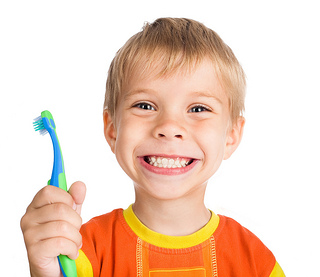
Imagine that you sit down for some evening television, and during the course of the evening, you see five commercials regarding dental products. They all claim to be the best. Then remember your last visit to the dental aisle at a local grocery store. The choices are overwhelming and there seems to be no sure answer as to which would be the best choice for your child.

Just 4 Kids Pediatric Dentistry recommends that parents break down the decision process. First, consider your child’s age and stage of development. Up until age ten to 12, your child cannot adequately brush or floss independently. It is not a maturity issue, but rather dexterity. Automatic toothbrushes are highly appropriate for all ages. Brushing quality improves when using an electric toothbrush. Use it together with your child, and always play an active role in your child’s oral home care.

Flossers are great for children. These will have a horseshoe shape on one end with floss in-between. A particular brand name does not matter. Some have a higher quality and this should be evident when you use them. You can make a choice for individual preference with color, handle size, or shape, etc. Make sure you wipe or rinse the flossers to avoid bringing plaque and/or bacteria from tooth to tooth. Even better, try using a regular piece of floss.

There are many brands of toothpaste and there are also differences in the ingredients. Some contain sodium fluoride, the standard ingredient in cavity prevention. Others have stannous fluoride, which is anti-bacterial and anti-cavity. Potassium nitrate is commonly found in anti-sensitivity, and triclosan is found in one particular brand for anti-bacterial properties. It is most common for children to be at a high risk for cavities. Therefore, our team at Just 4 Kids Pediatric Dentistry recommends toothpaste with fluoride as long as brushing is supervised.

Before a child has any primary molars, you can use toothpaste without fluoride. This is an ideal time to use toothpaste with xylitol. Xylitol should be listed as the first ingredient; this way you’ll get the almost medicinal property of this natural sweetener. After you have found the right type of toothpaste, consider its flavor. The best kind of toothpaste is one that will be used, so choose a flavor that your child will love!

If you have any other questions, our would like specific brand recommendation feel free to call us at Just 4 Kids Pediatric Dentistry or ask Dr. Tang during your next appointment!

When should I begin brushing my baby's teeth?

November 19th, 2013

When should I begin brushing my baby's teeth

One question our team at Just 4 Kids Pediatric Dentistry hear all the time is, “When should I start brushing my baby’s teeth?”

You should begin regular cleanings even before your baby has teeth. After each breast feeding (or bottle-feeding) use a clean, damp washcloth to gently rub your baby’s gum tissue. You may wrap the material around one finger to make it easier to remove any food bits from your baby’s mouth.

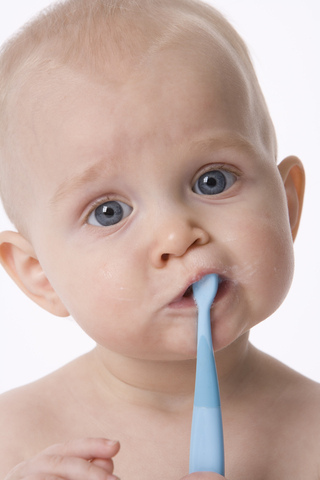
When your baby’s first tooth comes in, switch to a baby toothbrush. Look for special baby toothbrushes in your drugstore; they have just a few bristles and are very soft. There are even brushes shaped like finger puppets that fit over the tip of your pointer finger! All you need at this point is water (no toothpaste yet).

After a few more teeth appear, you may start using toothpaste, but you only need a tiny bit. Ask Dr. Tang when the best time to start your child with fluoridated toothpaste. From the beginning, have your little one practice spitting the toothpaste out after brushing. That way, he or she will already have the good habit of spitting when you switch to fluoride toothpaste, which should never be swallowed.

If you have any questions about caring for your baby’s teeth, or to schedule an appointment at our convenient Surrey, BC office, please contact Just 4 Kids Pediatric Dentistry.

How to Care for a Teething Baby

November 12th, 2013

After hours of juggling a wailing baby, you’re probably desperate to address teething pain. If your baby is irritable, drooling, and chewing on hard objects, he or she is likely teething. Although some discomfort while your baby is teething is inevitable, learning a few basic approaches can ease painful gums and soothe your frazzled nerves.

  • Offer your finger. Simply chewing on your nice, plump finger may be enough to ease your little one’s pain. Make sure you clean your finger before placing it in your baby’s mouth.
  • Use a teething ring. A firm rubber teething ring allows your child to gnaw, and alleviates pain. If your baby seems to like sucking on a bottle, replace the milk or formula with water during teething periods. This reduces sugar intake and decreases the risk of tooth decay.
  • Cool it down. Stick a clean, moist washcloth in the freezer (place it on a tray for cleanliness) and offer that to your baby. The cooler temperature of the chilled cloth eases the pain of teeth erupting through the gums. Soaking the washcloth in non-caffeinated tea, such as chamomile, may reduce inflammation associated with teething.
  • Grab some hard foods. Certain foods allow your kiddo to gnaw, and can ease teething pain. For example, frozen bananas, large chunks of chilled carrots, an apple, or frozen bagels make good teething pain relievers. If you’re offering your child solid food, watch carefully to ensure that your infant doesn’t bite off a piece and choke.
  • Try a natural remedy. Years of grandmotherly wisdom suggest that home remedies might help with teething. Try rubbing clove oil, peeled ginger root, or vanilla extract onto your Use medications. If your baby seems to be especially uncomfortable, over-the-counter medications may be appropriate. Giving an age-appropriate dose of acetaminophen (Tylenol) or ibuprofen (Advil) may reduce discomfort. Make sure you check with your child’s pediatrician or our office first to ensure the medication is safe.

If nothing seems to be helping your child’s teething pain, you can always schedule an appointment with Dr. Tang. Our team at Just 4 Kids Pediatric Dentistry understands the unique health needs of your little one, and are more than happy to help ensure he or she grows up with a beautiful smile.

For more information about teething, or to schedule an appointment with Dr. Tang, please give us a call at our convenient Surrey, BC office today!

Mon 8:00am to 4:00pm Tue 8:00am to 4:00pm Wed 8:00am to 4:00pm Thu 7:30am to 5:00pm Fri 8:00am to 4:00pm